Steam System Assessment Services
Identify Failed Traps. Quantify Losses. Restore System Performance.
SSI Services, Inc. evaluates steam and condensate systems to identify losses, understand recurring problems, and help facility teams prioritize corrective action.
Water hammer, repeated steam trap failures, wet steam, condensate backup, unstable pressure, excessive venting, and equipment performance problems may seem like isolated issues. Often, the root cause lies elsewhere in the system.
A steam system assessment looks beyond the failed component. SSI reviews how steam is distributed, used, drained, and returned so engineering, operations, and maintenance teams can better decide what to correct first.
When corrective work is needed, SSI can carry assessment findings into repair, system modification, verification testing, and ongoing service where the scope aligns with SSI’s capabilities.
SSI performs steam system assessments for industrial manufacturing, food and beverage, healthcare, life sciences, academic, institutional, and federal facilities.
Request a Steam System Assessment
Identify failed traps, quantify steam losses, and prioritize corrective repairs before system issues escalate.
Jump to Content:
- What Is a Steam System Assessment?
- What SSI Evaluates
- Why Steam System Problems Compound
- System Assessment vs. Single-Issue Inspection
- SSI’s Steam System Assessment Process
- What You Receive from an SSI Steam System Assessment
- Field Experience
- Industries Served
- When to Schedule a Steam System Assessment
- Frequently Asked Questions
- Request a Steam System Assessment
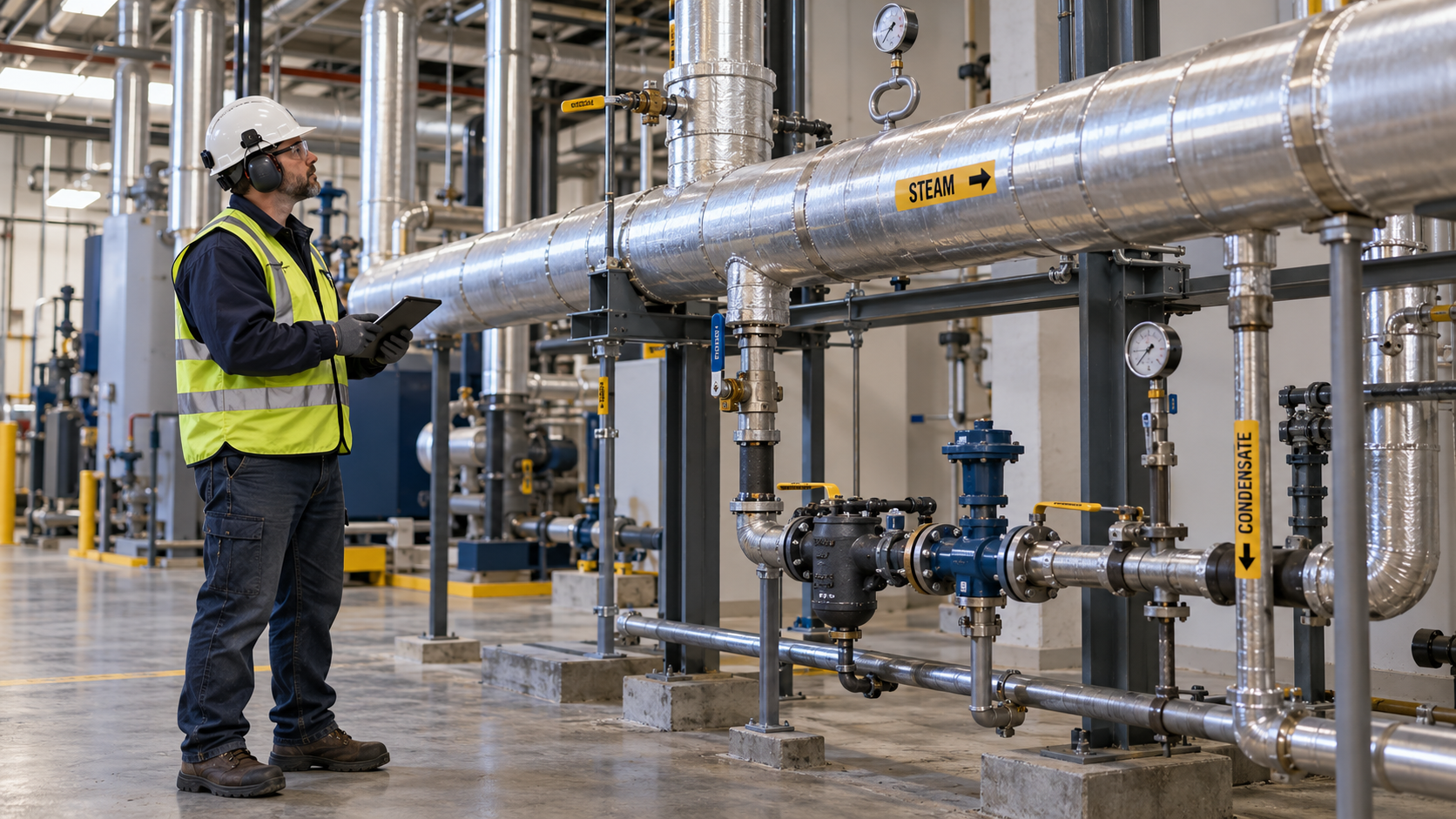
A steam system assessment is a field-based evaluation of how a steam and condensate system performs under actual operating conditions.
Rather than stopping at the component where a problem appears, the assessment looks at the connected utility and the conditions that may be contributing to the issue.
Depending on the facility and assessment scope, SSI may review:
- Steam distribution piping and pressure zones
- Drainage, drip legs, and trap stations
- Steam trap condition and application
- Condensate return piping and recovery equipment
- Steam quality and supply conditions
- Steam-supported equipment and utility connections
- Valves, strainers, insulation, and instrumentation
- System modifications and maintenance concerns
- Corrective action priorities
Facilities typically request an assessment when recurring symptoms suggest that individual repairs are not addressing the broader system condition.
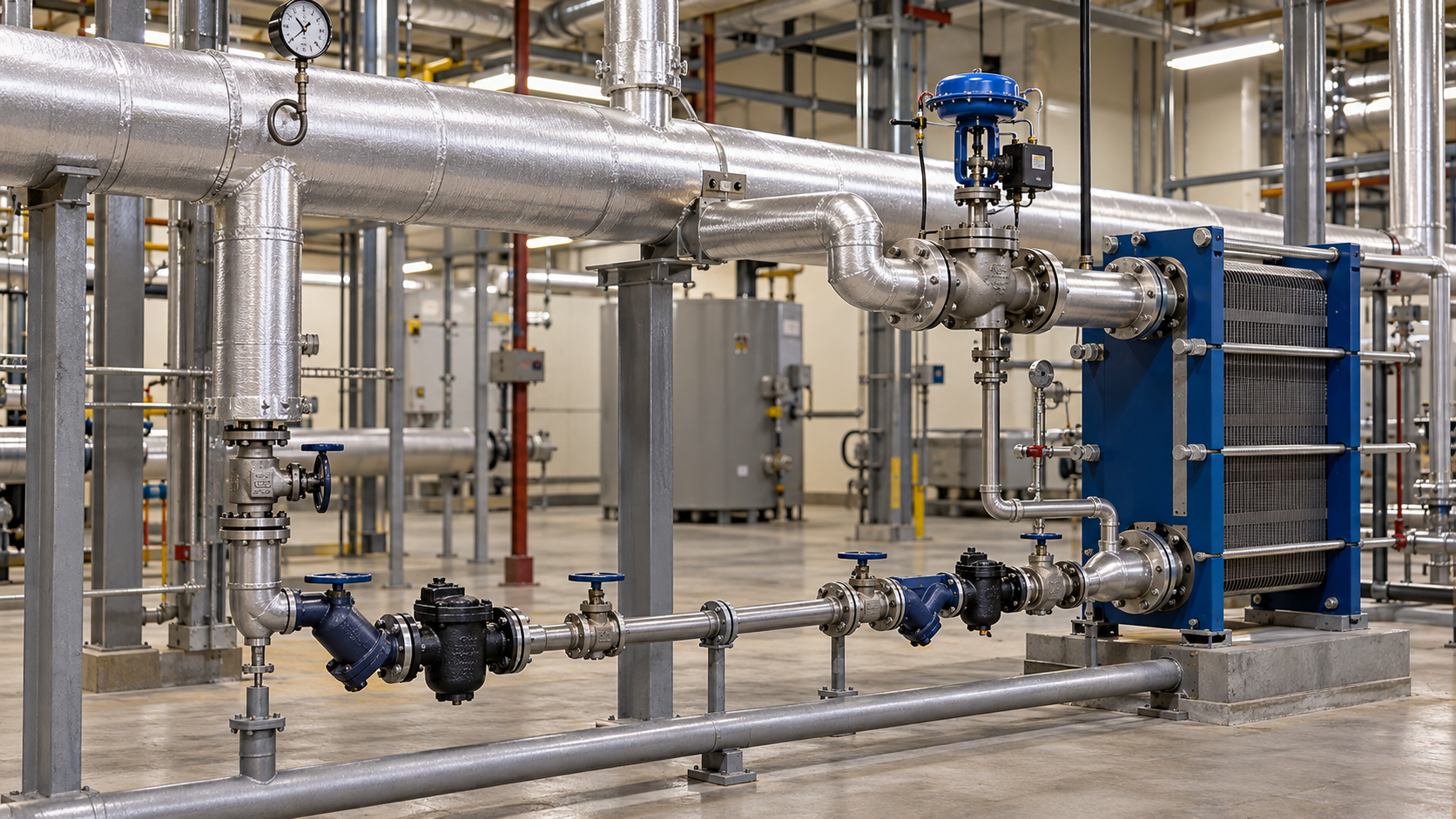
The scope of an assessment depends on the problem, the system, and the information available. SSI follows the operating condition through the portions of the steam and condensate system that are relevant to the facility concern.
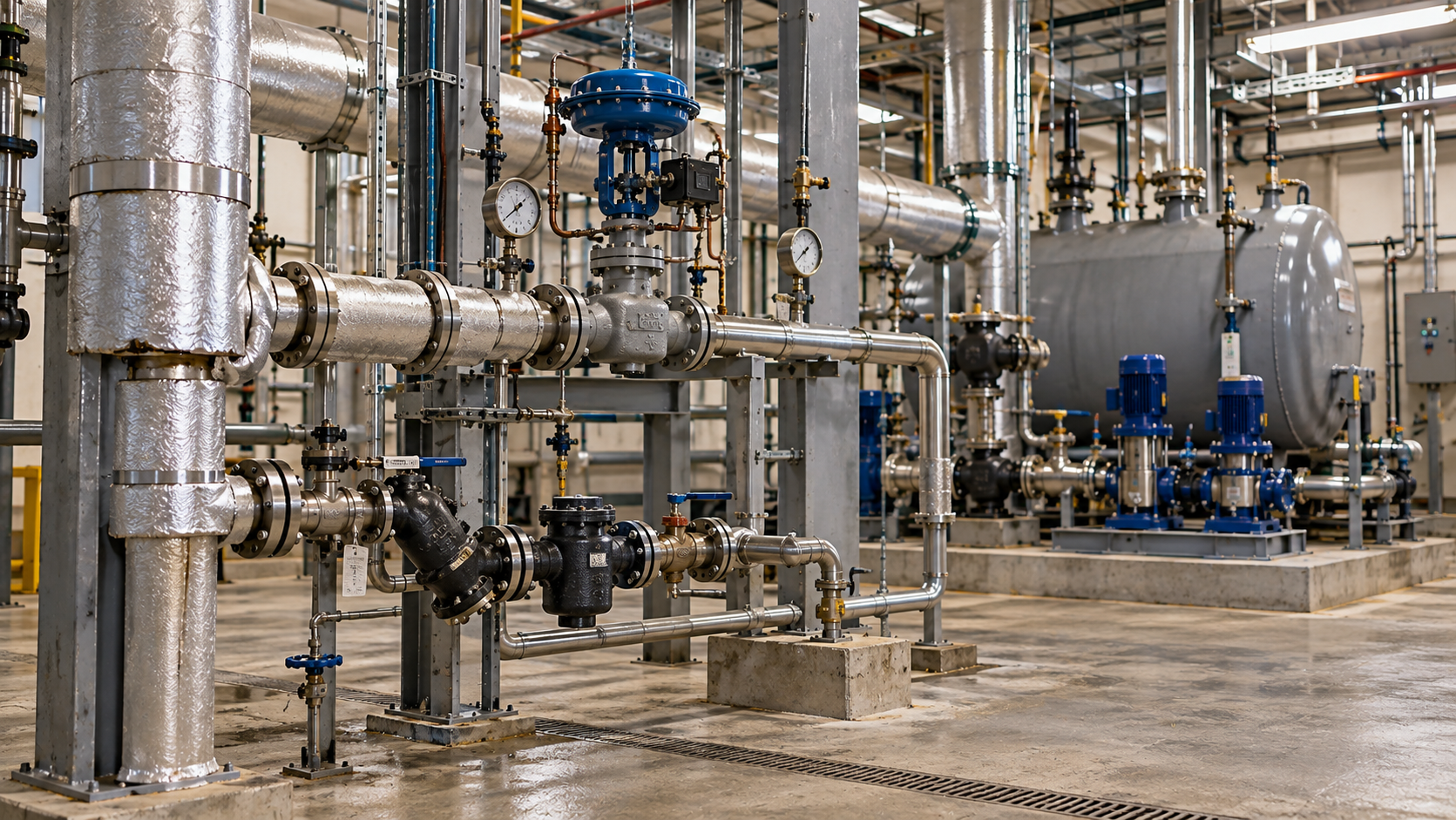
Steam Trap Performance
Failed-open steam traps can pass live steam into the condensate return system. Failed-closed or poorly draining traps can allow condensate to accumulate and contribute to water hammer, unstable heat transfer, and equipment problems.
Where traps are part of the assessment, SSI reviews condition, application, installation, drainage, and visible failure indicators.
Facilities that need a complete trap-by-trap condition record can request a dedicated Steam Trap Survey using ultrasonic testing, thermal verification, condition classification, asset documentation, and prioritized repair recommendations.
Steam Quality and Supply Conditions
Wet steam, condensate carryover, non-condensable gases, unstable pressure, and other supply conditions can affect heat transfer, humidification, sterilization support, and process performance.
These issues may first appear as equipment complaints or process variation rather than as an obvious utility problem.
SSI reviews the conditions surrounding the affected application and can recommend targeted Steam Quality Testing when direct measurement is needed.
Condensate Return Performance
Poor condensate return can show up as flooded equipment, excessive venting, pump problems, recurring water hammer, or reduced condensate recovery.
The assessment may follow those symptoms through return piping, receivers, pumps, pressure-powered return equipment, check valves, venting, and back-pressure conditions to determine where drainage or recovery is being restricted.
Where deeper corrective work is required, SSI can support Condensate Return System improvements.
Steam Distribution and Piping
Steam distribution systems change over time. Loads shift, equipment is replaced, new branches are added, and field modifications may no longer match the original design basis.
SSI reviews relevant piping conditions such as:
- Pressure zones
- Drainage points
- Drip legs
- Pipe routing
- Insulation
- Valve arrangements
- Strainers
- Bypasses
- Isolation points
- Branch connections
- Equipment tie-ins
The goal is to determine whether the distribution system still supports how the facility actually operates.
Steam-Supported Equipment
Heat exchangers, coils, humidifiers, sterilizers, jacketed vessels, process equipment, and unit heaters often show symptoms before the utility condition behind them is clear.
Slow heat-up, flooding, unstable temperatures, excessive cycling, and repeated equipment repairs may point back to steam supply, drainage, condensate return, or pressure conditions.
A system assessment looks at the utility side of the equipment so the corrective action addresses the contributing condition rather than only the visible symptom.
System Changes and Design Review
New equipment, utility expansions, piping modifications, pressure changes, and condensate-return upgrades can change how an existing steam system behaves.
When system changes are part of the concern, SSI reviews practical considerations such as:
- Available steam and pressure conditions
- Drainage requirements
- Condensate return implications
- Isolation
- Equipment tie-ins
- Access
- Maintainability
- Existing piping constraints
Where additional planning is required, SSI can support Steam System Design Services.
Corrective Action Priorities
An assessment should produce more than a list of observations.
SSI organizes findings around the conditions most important to the facility, including system impact, reliability, energy loss, equipment criticality, maintenance demand, safety considerations, and practical implementation sequence.
The result is a clearer path from observed condition to corrective work.
Steam and condensate systems are connected. A problem in one part of the utility can affect equipment and operating conditions somewhere else.
Energy and Utility Loss
Live steam loss, poor insulation, excessive venting, leaking components, and unrecovered condensate can increase utility demand continuously.
Equipment Reliability
Poor drainage, condensate backup, unstable pressure, and wet steam can affect traps, valves, pumps, heat exchangers, piping, and connected equipment.
Process Performance
Steam-system conditions may first appear as slow heat-up, unstable temperatures, equipment complaints, or inconsistent process performance.
Maintenance Demand
Repeated component repairs can consume maintenance time without resolving the operating condition contributing to the failures.
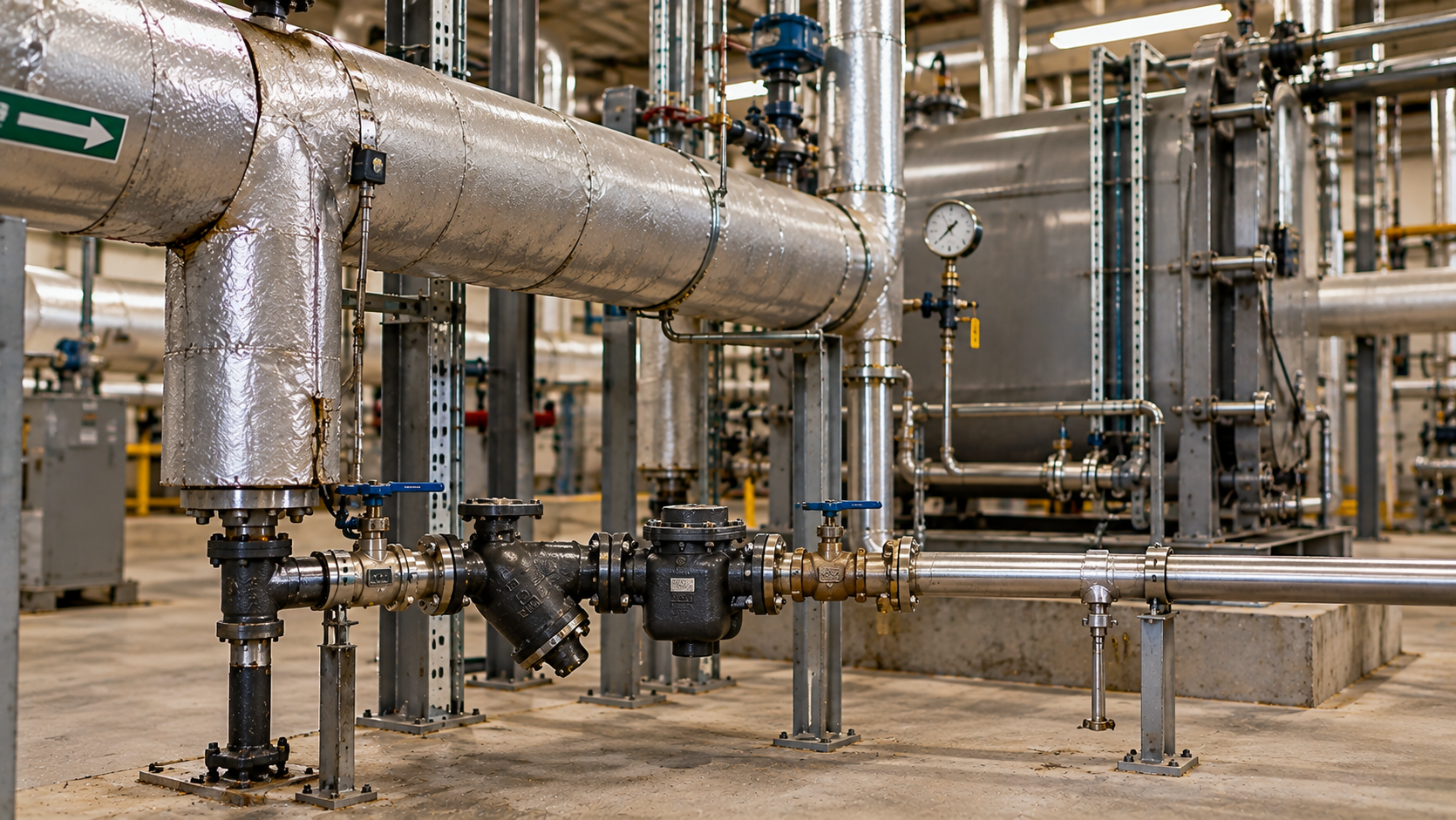
A single-issue inspection answers a focused question about a component or specific problem.
A steam system assessment asks what conditions in the connected utility may be contributing to that problem.
| Single-Issue Inspection | Steam System Assessment | |
|---|---|---|
| Purpose | Confirm a specific component condition or fault | Understand the broader operating condition |
| Scope | One component or isolated issue | Connected steam and condensate system |
| Typical Output | Component finding | System findings and corrective priorities |
For example, replacing a failed steam trap may restore operation without explaining why the trap failed. The trap may be misapplied, poorly drained, exposed to unexpected back pressure, or operating under conditions that have changed since installation.
The same applies to pumps, valves, heat exchangers, and other steam-supported equipment.
A broader assessment helps determine whether the right next step is repair, targeted testing, system modification, design review, or recurring maintenance.
Assessment scope is based on the facility, operating concern, system size, accessibility, and information available. Not every engagement requires every activity or testing method.
Define the Scope
SSI begins with the facility concern, known symptoms, system boundaries, operating priorities, available documentation, access requirements, and assessment goals.
This keeps the fieldwork focused on the conditions that matter most.
Evaluate the System
Field assessment may include steam distribution, trap stations, condensate return equipment, pressure zones, drainage points, equipment connections, valves, insulation, and visible failure conditions.
The scope follows the operating problem rather than a fixed checklist.
Verify Where Needed
Field observations may require additional testing.
Depending on the condition, SSI may use:
- Ultrasonic testing
- Thermal inspection
- Temperature measurement
- Steam quality testing
- Other appropriate diagnostic methods
Testing is selected to answer the operating question.
Document and Prioritize
SSI records relevant observations, system conditions, asset information, failure points, and recommended corrective actions.
Findings are organized to support repair planning, maintenance priorities, capital decisions, and future inspection or monitoring.
Support Corrective Work
Where the required work falls within SSI’s capabilities, assessment findings can move into repair, system modification, verification testing, documentation updates, recurring inspection, and ongoing maintenance support.
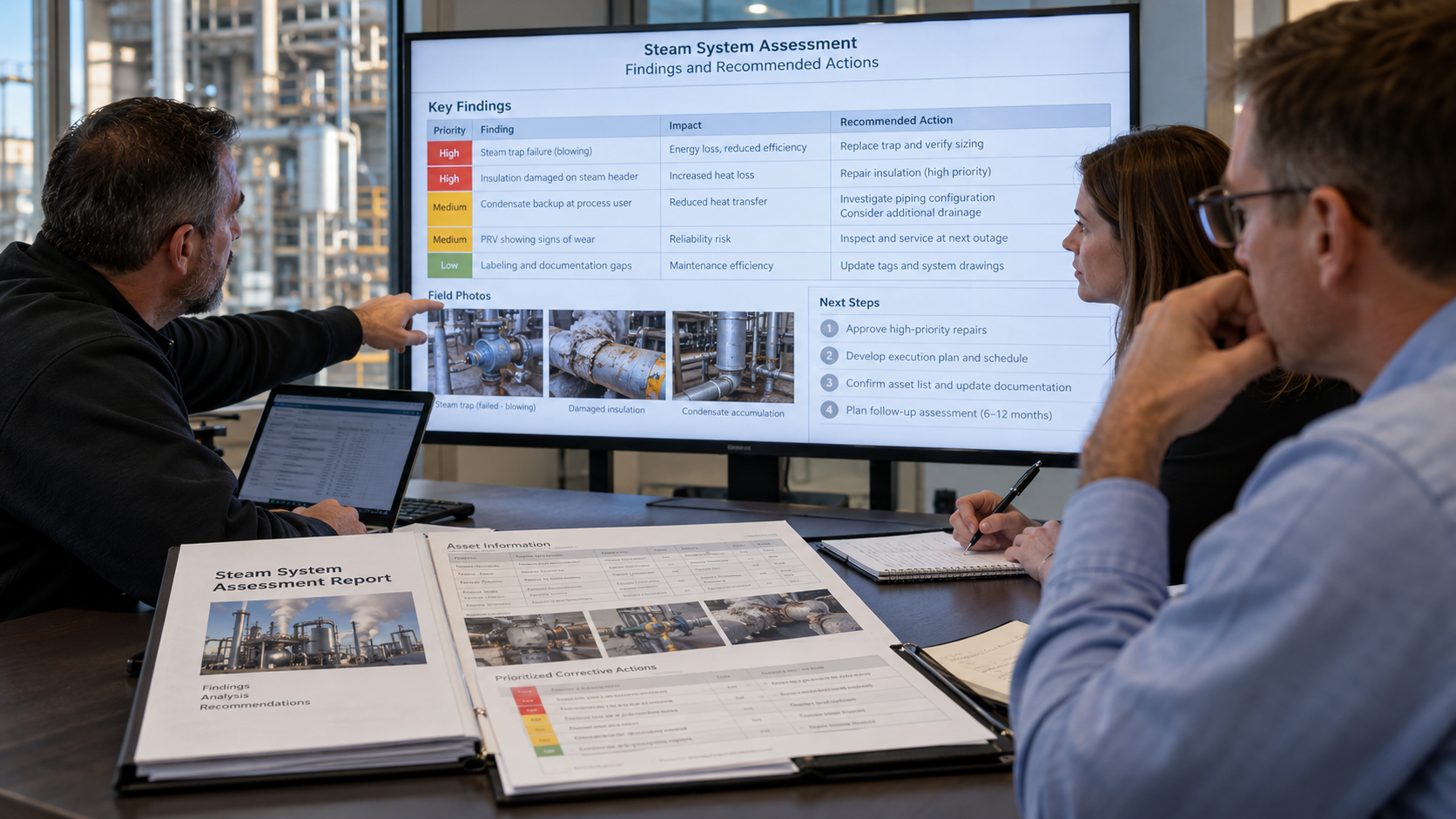
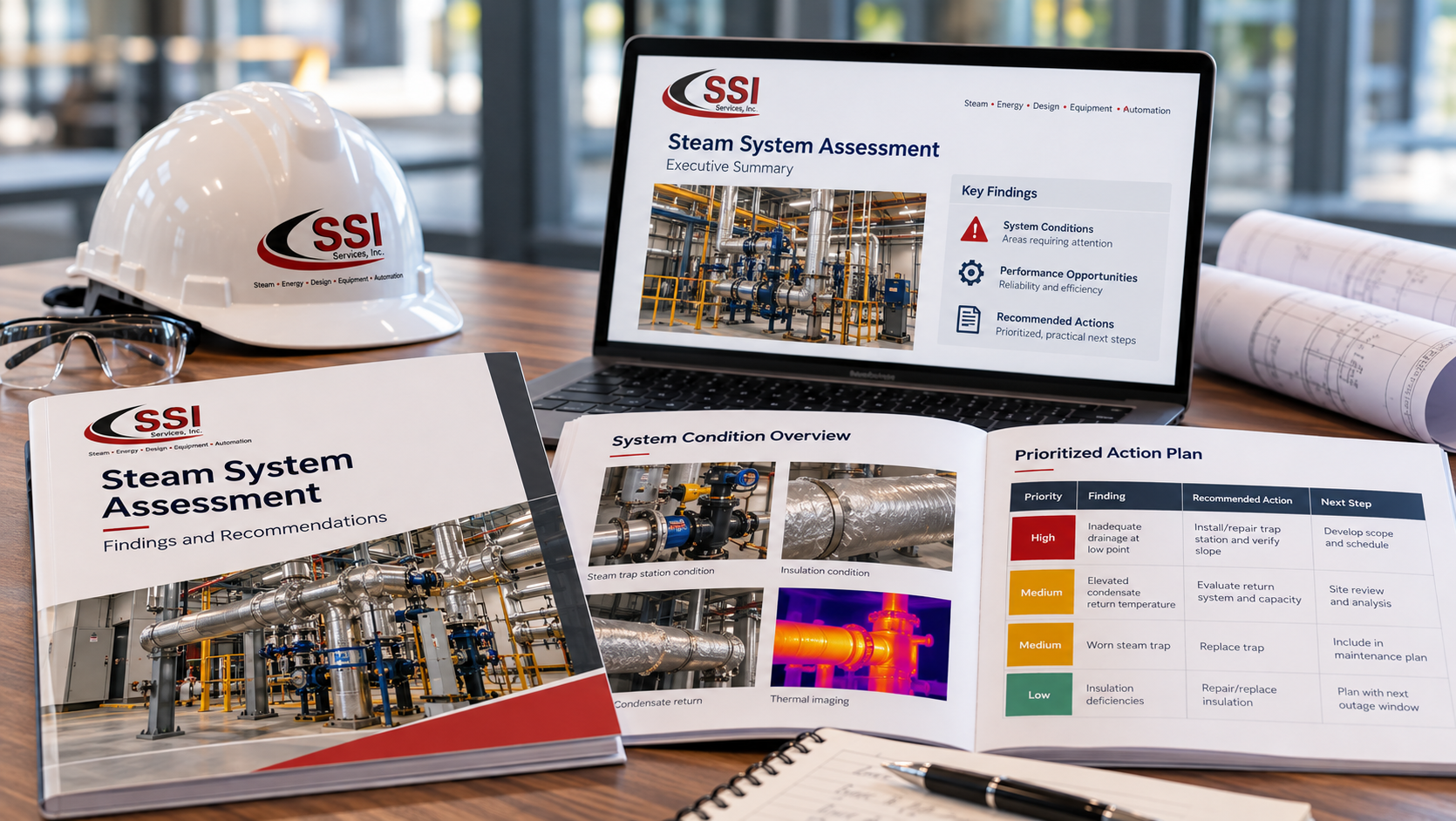
The assessment is intended to give facility teams a clear record of what was observed, what may be contributing to the condition, and what should happen next.
Depending on the agreed scope, deliverables may include:
- Documented steam and condensate system observations
- Identified operating concerns and visible failure points
- Relevant asset and equipment information
- Testing results where verification is performed
- Findings tied to likely contributing conditions
- Prioritized corrective-action recommendations
- Repair and maintenance sequencing considerations
- Recommendations for additional testing or design review
- Information supporting maintenance and capital planning
- Defined next steps for corrective work and verification
The goal is to leave engineering, operations, and maintenance with information they can use to plan the next action.
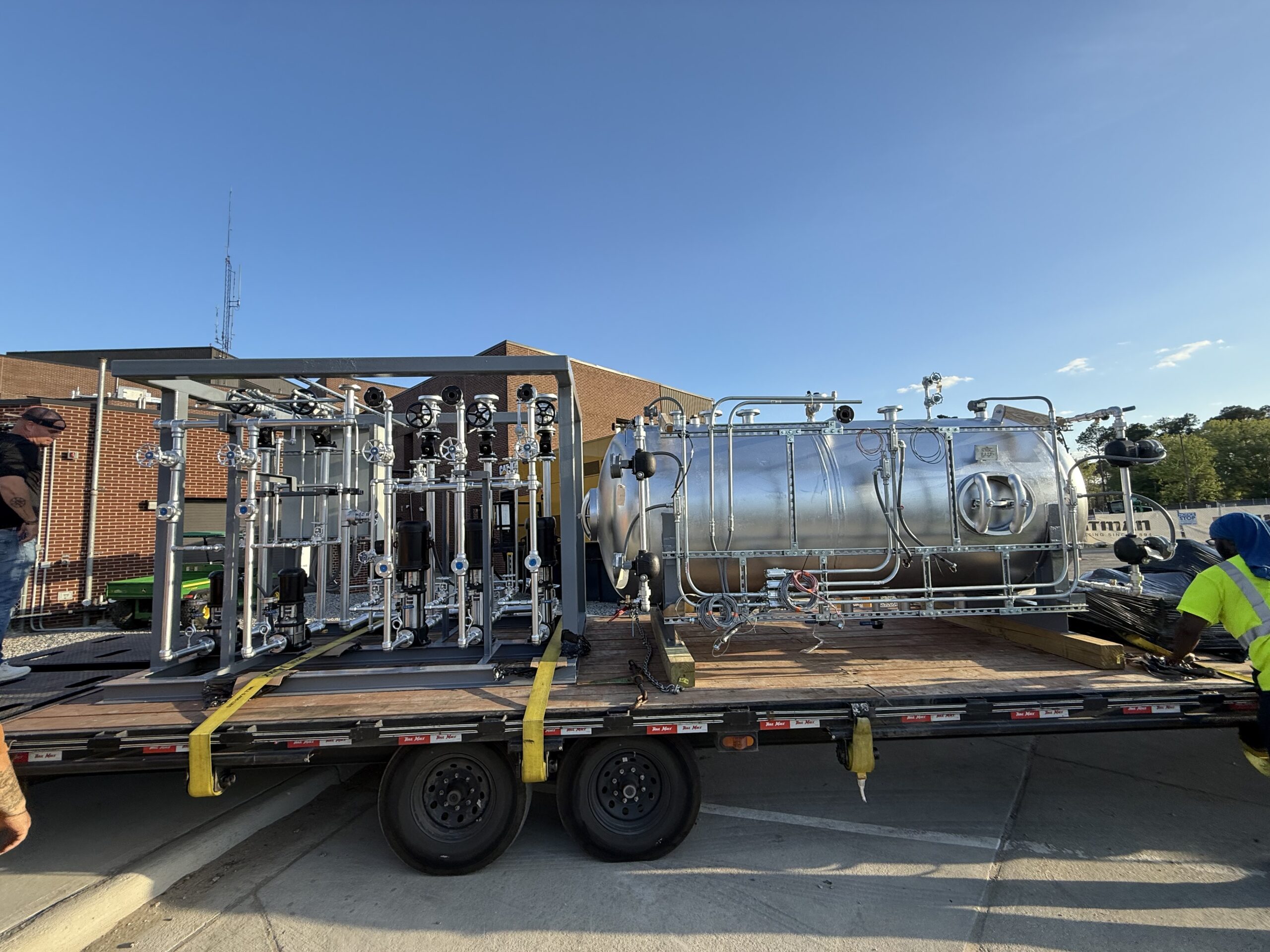
Steam-system work often has to be assessed, planned, and executed while the facility remains operational.
SSI has performed steam trap surveys, trap replacement, condensate recovery work, verification testing, and related documentation in industrial, healthcare, institutional, and life-sciences environments.
U.S. Department of Veterans Affairs, VISN 6
Seven VA Medical Centers | North Carolina and Virginia
Under a seven-year Energy Savings Performance Contract administered by Con Edison Solutions, SSI conducted a steam trap survey and replacement program across seven VA Medical Centers in North Carolina and Virginia.
Work included trap-population testing, tagging, documentation, removal and replacement of failed radiator and non-radiator traps, associated piping, valves, fittings, and finish restoration. Work was performed in operating hospital environments and coordinated around scheduled shutdown windows.
Life Sciences Manufacturing Campus | North Carolina
Following a steam trap survey that identified widespread trap failure across the campus, SSI replaced 177 failed steam traps while condensate-recovery upgrades were also being completed.
The work included application-appropriate trap replacements, new strainers, check valves, universal trap stations, verification testing, replacement of three condensate recovery units, and repair of one pressure-powered return unit in an active manufacturing environment.
Assessment priorities vary by facility because the role of steam, consequences of interruption, access requirements, and operating conditions are different in each environment.
Industrial Manufacturing
Manufacturers use steam for process heating, cleaning, humidification, and equipment support. Assessments help facility teams identify conditions affecting reliability, energy use, equipment performance, and maintenance demand.
Food and Beverage Manufacturing
Food and beverage operations rely on steam for process heating, sanitation, cleaning, and production support. SSI reviews steam and condensate conditions that may affect temperature control, drainage, equipment performance, utility use, and maintenance.
Healthcare and Hospitals
Hospitals use steam for building heat, humidification, domestic hot water, sterilization support, and other facility operations. Assessment work must account for occupied spaces, access limitations, shutdown coordination, and continuity of operations.
Pharmaceutical and Life Sciences Manufacturing
Life-sciences facilities rely on steam-supported utilities for process support, cleaning, humidification, equipment operation, and controlled manufacturing environments. Assessments can help identify utility-side conditions contributing to equipment, condensate, reliability, or maintenance problems.
Academic and Institutional Facilities
Colleges, universities, research campuses, and institutional facilities often operate distributed steam systems that have changed over many years. Assessments help document current conditions and establish repair priorities across complex infrastructure.
Federal Facilities
Federal facilities use steam to support occupied buildings, healthcare environments, laboratories, central plants, and other infrastructure. Documented assessment findings can support maintenance planning, repair priorities, and long-term utility decisions.
A steam system assessment is useful when recurring symptoms, system changes, or incomplete information make the correct next step unclear.
Common triggers include:
- Water hammer, wet steam, condensate backup, unstable pressure, excessive venting, or visible steam loss
- Steam traps or other components repeatedly failing in the same area
- Steam-supported equipment flooding, overheating, warming slowly, underperforming, or failing prematurely
- Condensate return equipment venting, overflowing, losing recovery, or operating unreliably
- Individual repairs have been completed but the problem continues
- Facility expansion, equipment replacement, piping modification, or utility changes are being planned
- Engineering or maintenance teams need documented priorities for repair, reliability, or capital planning
An assessment can cover an entire facility or focus on a defined system, operating area, or recurring problem.
A Steam Trap Survey focuses on the trap population and documents the condition of individual traps.
A steam system assessment is broader. It looks at how traps, distribution, drainage, condensate return, pressure conditions, steam quality, and connected equipment interact.
A facility may need both when trap condition and broader system performance need to be understood.
Steam Quality Testing measures defined steam-quality parameters at specific locations.
A steam system assessment evaluates the broader utility and may recommend targeted testing when operating symptoms or application requirements indicate that steam quality should be measured directly.
Yes. The scope can focus on a particular operating area, piece of equipment, pressure zone, condensate system, recurring problem, or other practical system boundary.
Larger facility-wide assessments may be completed in phases.
Timing depends on system size, scope, accessibility, operating schedule, available documentation, and required testing.
A focused problem assessment may be completed during one site visit. A larger facility-wide assessment may require phased fieldwork and follow-up verification.
Where the required work falls within SSI’s capabilities, SSI can support corrective action such as steam trap replacement, condensate-return improvements, equipment-related corrections, system modifications, verification testing, and ongoing maintenance support.
SSI documents the findings and recommended next steps.
Depending on the condition, the next phase may include repair planning, a dedicated steam trap survey, targeted steam quality testing, condensate-return improvements, steam-system design support, verification testing, or a recurring inspection and maintenance program.
If recurring steam problems are being treated one component at a time, a broader system assessment may help identify the condition connecting those failures.
SSI evaluates steam and condensate systems, documents relevant operating conditions, and gives facility teams a prioritized path toward corrective action.
A technical specialist will review the facility concern, affected system, known symptoms, available information, and operating constraints before defining the appropriate next step.
SSI Services, Inc. | Steam • Energy • Design • Equipment • Automation