Steam Trap Survey Services
Identify Failed Traps. Quantify Losses. Restore System Performance.
A steam trap survey is a systematic, instrument-based assessment of every steam trap in your system that determines which traps are operating correctly, which have failed to open, and which have failed to close. For facility and plant managers responsible for steam system performance, a survey is the starting point for corrective action.
SSI Services, Inc. performs steam trap surveys for industrial manufacturers, food and beverage facilities, and hospitals across North Carolina, Virginia, South Carolina, Georgia, and Tennessee. Our surveys use ultrasonic monitoring, thermal imaging, and visual inspection to produce a complete trap-by-trap condition assessment with prioritized repair recommendations and cost-of-loss estimates your team can act on.
Identify failed traps, quantify steam losses, and prioritize corrective repairs before system issues escalate.
Jump to Content:
- What Is a Steam Trap Survey?
- What SSI Surveys Cover
- What Failed Steam Traps Actually Cost
- Survey Maintenance Program vs. One-Time Inspection
- SSI’s Steam Trap Survey Program
- Client Experience
- Industries and Applications
- When to Schedule a Steam Trap Survey
- What You Receive from SSI
- Frequently Asked Questions
- Request a Steam Trap Survey
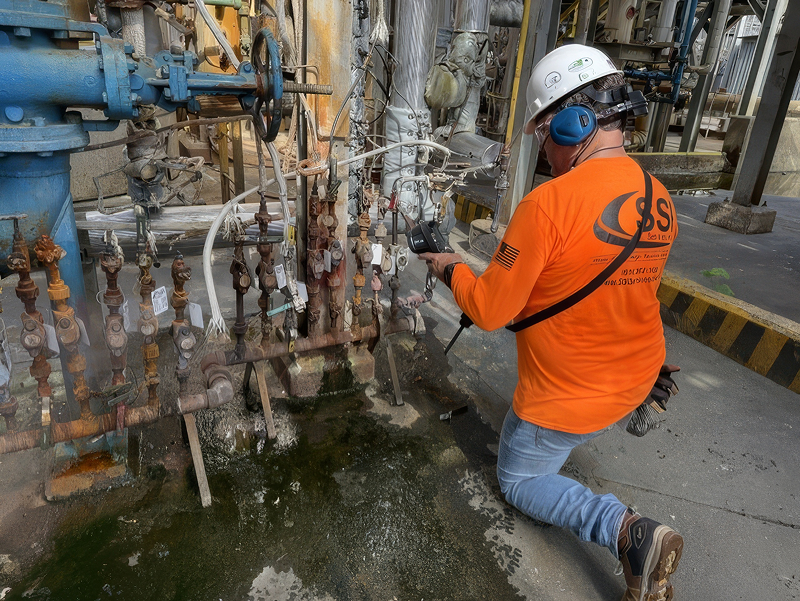
A steam trap survey is a non-invasive, system-wide inspection conducted while your steam system is in operation. Each trap is tested using ultrasonic and thermal instruments to determine its operating condition. The results identify which traps are functioning normally, which have failed open and are passing live steam, and which have failed closed and are blocking condensate, with both failure modes incurring measurable costs and safety risks.
The U.S. Department of Energy has noted that steam systems that have gone three to five years without active trap management may have failure rates approaching 30%. Well-managed programs typically hold that number below 5%. The gap between those two figures represents direct operating cost and avoidable system risk.
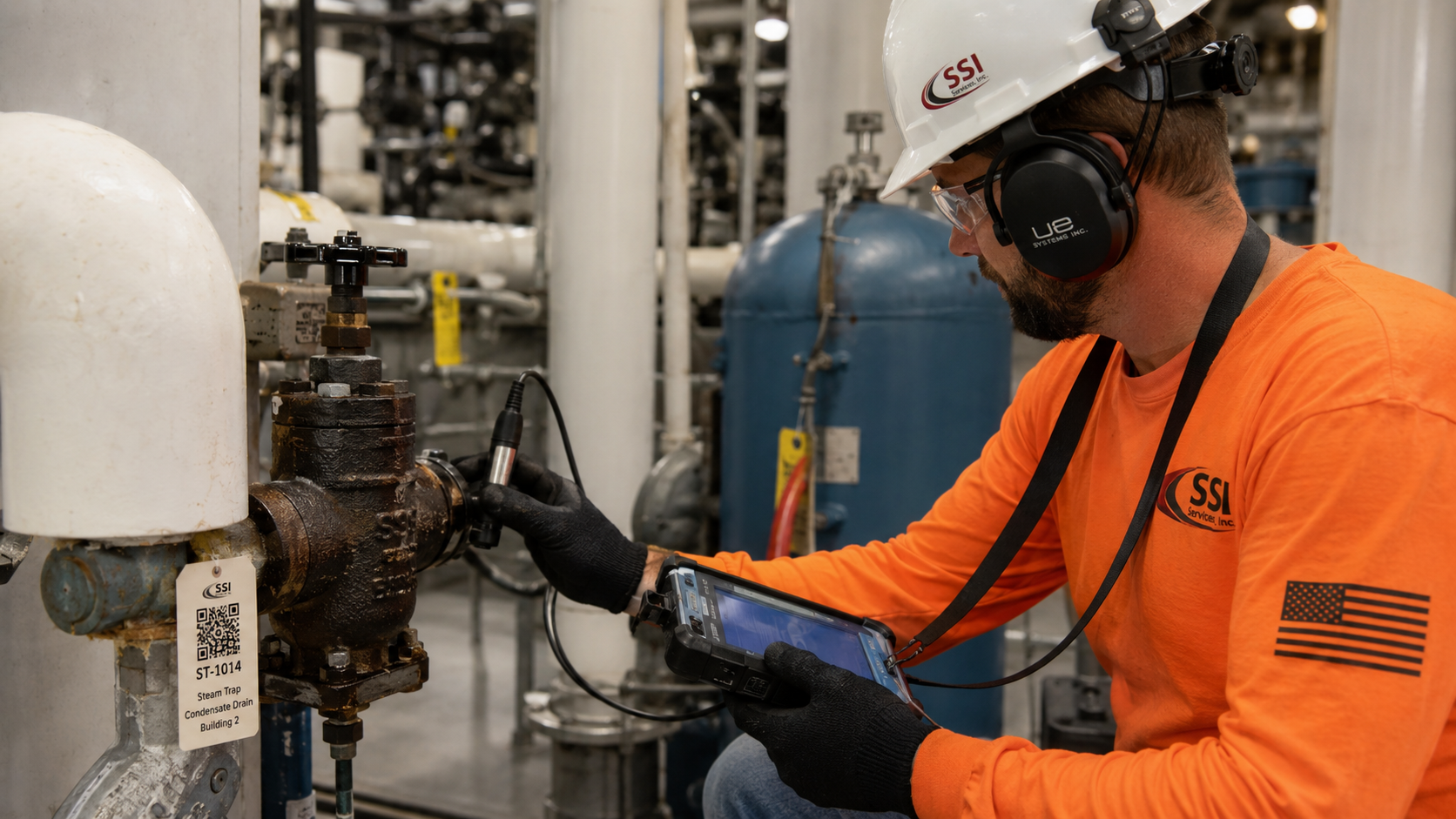
A steam trap survey is a non-invasive, system-wide inspection conducted while your steam system is in operation. Each trap is tested using ultrasonic and thermal instruments to determine its operating condition. The results identify which traps are functioning normally, which have failed open and are passing live steam, and which have failed closed and are blocking condensate, with both failure modes incurring measurable costs and safety risks.
The U.S. Department of Energy has noted that steam systems that have gone three to five years without active trap management may have failure rates approaching 30%. Well-managed programs typically hold that number below 5%. The gap between those two figures represents direct operating cost and avoidable system risk.
Ultrasonic Testing
Ultrasonic instruments detect the high-frequency sound signatures produced by steam flow and condensate discharge, allowing our technicians to assess the internal condition of the trap without disassembly, even in systems with limited visual access. Ultrasonic testing can identify continuous steam blowthrough, blocked discharge, and abnormal cycling patterns.
Thermal/Infrared Testing
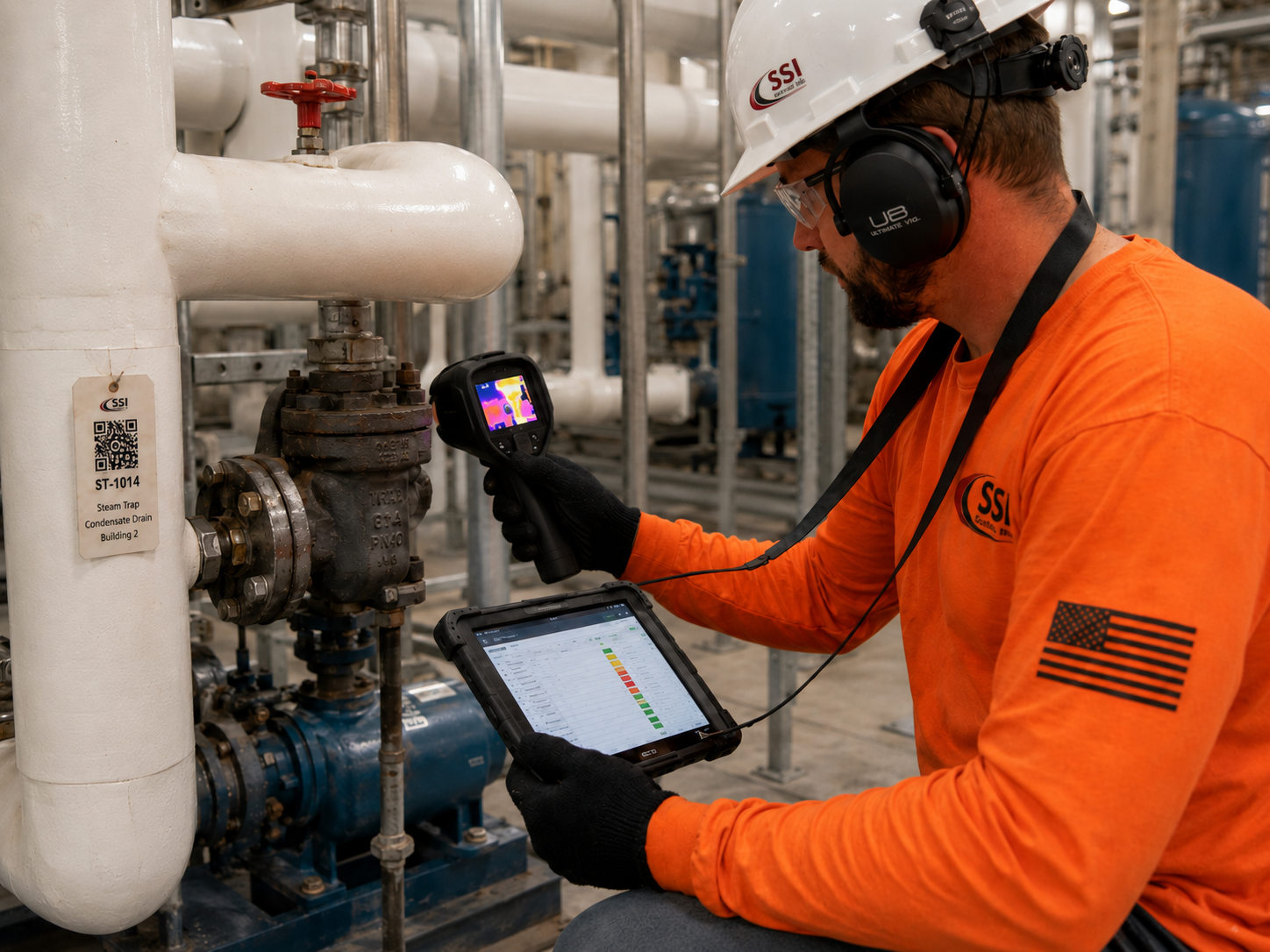
Temperature measurements at the inlet and outlet of each trap confirm condensate flow and support interpretation of ultrasonic readings. SSI uses thermographic confirmation where additional verification is required, particularly in hospital and critical facility environments.
Visual Inspection
Where system design permits open discharge observation, visual inspection confirms flash steam behavior versus live steam loss and documents station condition, trap orientation, including valves, strainers, and bypass configurations.
QR Asset Tagging
Each surveyed trap receives a QR-based asset tag documenting the trap’s location, application, pressure, manufacturer, model, and condition at the time of the survey, creating a permanent, searchable trap inventory that your maintenance team can reference going forward.
Condition Report and Repair Recommendations
SSI delivers survey findings in a structured report that includes trap-by-trap condition classification, cost-of-loss estimates for failed-open traps, estimated carbon emissions impact, prioritized repair recommendations, and, where applicable, trap sizing and application observations.
Facility Asset Mapping
SSI documents each steam trap’s location, service area, application, and operating condition to create a practical asset map for maintenance planning. This mapping helps your team locate traps quickly, prioritize corrective work, track repair history, and maintain a searchable record of steam trap performance over time.
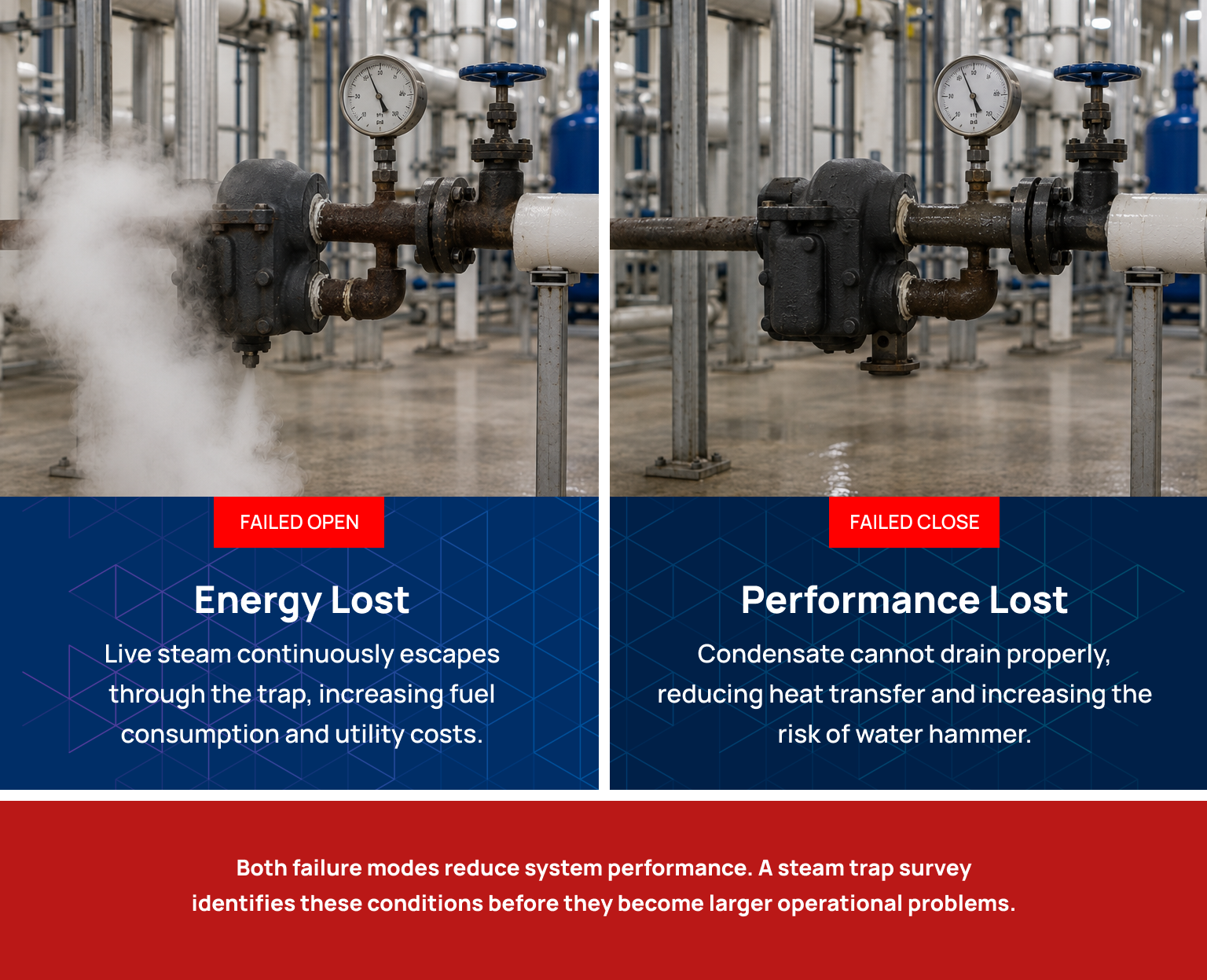
Steam trap failures are not isolated component problems. They create downstream cost and safety risk throughout the system.
Failed Open — Live Steam Loss
A trap failed in the open position passes live steam continuously into the condensate return system. On a moderately pressurized system, a single failed-open trap can represent thousands of dollars per year in fuel cost. In a facility with 200 traps and a 20% failure rate, cumulative steam losses can reach tens of thousands of dollars annually before accounting for wear on downstream equipment.
Failed Closed — Condensate Backup and Water Hammer
A trap that fails closed prevents condensate from draining, allowing condensate to accumulate in steam lines and equipment. As steam contacts pooled condensate, rapid condensation creates pressure differentials that produce water hammer, which are sudden, high-force hydraulic events that damage piping, valves, heat exchangers, and pumps. In hospital and other occupied facility environments, water hammer events also pose safety risks to personnel.
Compounding Risk
Neither failure mode corrects itself. Failed traps continue to degrade system performance, increase maintenance burden, and lead to broader equipment failures and production yield. A steam trap survey identifies these conditions before they escalate.
In systems where trap failures are widespread, broader steam-quality issues, such as wet steam and condensate carryover, may also be present. Learn more about how these conditions affect system performance in our Steam Quality Testing page.
Talk with SSI about water hammer, condensate backup, live steam loss, pressure fluctuations, or unexplained energy increases.
A single steam trap inspection captures the system’s condition on a single day. It does not account for traps that fail in the months following the inspection, nor does it track which repairs were made and whether they held.
An ongoing steam trap survey program with defined inspection intervals, condition tracking, and verification testing after repairs keeps failure rates below the industry threshold. The survey is the starting point. The program produces durable results.
We structure our work accordingly: a baseline survey, prioritized corrective actions, verification testing, and a recurring inspection cadence aligned with your system’s criticality and operating conditions.
SSI is often engaged in annual steam system maintenance and repair programs that extend beyond a one-time survey. These programs help facilities track trap conditions, prioritize repairs, verify corrective work, and maintain reliable steam system performance throughout the year.
Set inspection intervals, track trap condition, verify repairs, and keep steam trap failure rates under control over time.
Baseline Survey
Full trap population assessment using ultrasonic, thermal, and visual methods. Every trap is tested, tagged, and classified.
Condition Classification
Each trap is documented as functional, failed open, failed closed, misapplied, or non-operational. Application and sizing issues are flagged separately.
Cost-of-Loss Estimates
Failed-open traps are quantified by steam loss rate and estimated annual cost, based on system pressure and operating hours. Both inform capital planning and repair prioritization.
Prioritized Repair Plan
Repair recommendations, whether performed by SSI or the client, are sequenced by safety risk, energy impact, and system criticality rather than failure type alone. For facilities that must remain operational during repairs, SSI coordinates lockout/tagout and localized steam shutdowns while sequencing the work to minimize disruption and reduce the need for validation updates.
Verification Testing
Once SSI’s repairs are complete, we perform follow-up testing to confirm that corrective actions resolved the identified failures. Our documents are updated with verification results in the survey record.
Recurring Inspection Cadence
SSI establishes survey frequency based on trap population size, facility type, and operational criticality. Most facilities require at least an annual survey, while critical systems, particularly in healthcare and pharmaceutical environments, benefit from semiannual or quarterly programs.
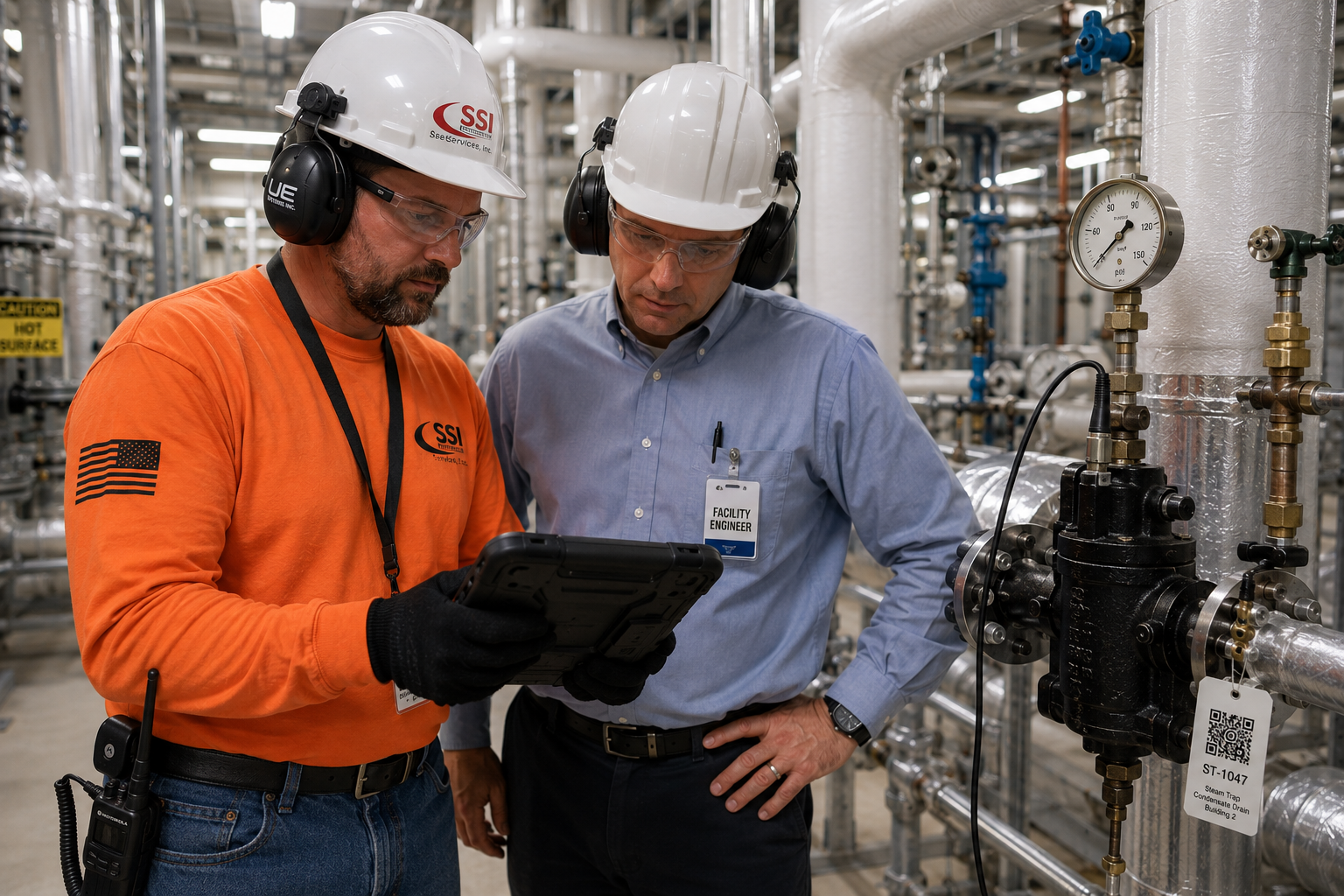
SSI Services has performed steam trap surveys and replacement programs for clients across the Southeast, including critical facility environments where work had to be completed without disrupting operations.
SSI performed a focused steam trap survey of operating room steam systems at a regional medical center. The scope included ultrasonic and thermal testing, QR asset tagging, thermographic confirmation, and verification of proper trap application and sizing. Survey findings quantified energy and cost losses due to failed traps and established the scope for targeted replacements. The project supported capital planning for steam system improvements in a hospital’s active patient care environment.
U.S. Department of Veterans Affairs — VISN 6 | Seven VA Medical Centers | NC & VA | Multi-Year Program
Under a seven-year Energy Savings Performance Contract administered by Con Edison Solutions, SSI Services conducted a comprehensive steam trap survey program across seven VA Medical Centers in North Carolina and Virginia. Work included full trap population testing, tagging, and documentation; removal and replacement of all failed radiator and non-radiator traps; associated piping, valves, and fittings; and restoration of finishes. All work was executed in operating hospital environments and during scheduled shutdown windows. The program eliminated live steam losses, mitigated water hammer and condensate backup, and restored proper steam system operation across all seven facilities without disrupting patient care.
Life Sciences Manufacturing Campus | North Carolina | 2024
Following a steam trap survey that identified widespread failure across the campus, SSI Services replaced 177 failed steam traps under a coordinated work plan that ran alongside condensate recovery upgrades. Replacements included application-appropriate float-and-thermostatic, inverted bucket, thermostatic, and thermodynamic traps. Work also included installation of new strainers, check valves, and universal trap stations, with verification testing following installation. Three condensate recovery units were replaced, and one pressure-powered return unit was repaired in parallel. Both projects ran simultaneously in an active manufacturing environment.
Industrial Manufacturing
Production facilities and process plants where steam system reliability directly affects output quality, uptime, and energy costs. Survey programs support maintenance planning, energy savings initiatives, and equipment protection.
Food and Beverage Manufacturing
Facilities where steam is integral to process operations and hygiene systems. Steam trap surveys identify failures that affect temperature control, product quality, and production consistency.
Healthcare and Hospitals
Facilities where steam trap failures create a safety risk for occupied areas and patient care operations. SSI has direct experience performing surveys and replacement work in active hospital environments, including VA Medical Centers and private health systems.
Academic Institutions
Colleges, universities, and research campuses often rely on distributed steam systems across laboratories, classrooms, residence halls, dining facilities, and central utility plants. Steam trap surveys help facilities teams reduce energy loss, prevent condensate backup, protect aging infrastructure, and support long-term maintenance planning across complex campus environments.
Federal Government Institutions
Federal facilities often operate large, mission-critical steam systems that support occupied buildings, healthcare environments, laboratories, maintenance facilities, and central plants. Steam trap surveys help identify failed traps, quantify steam losses, prioritize repairs, and document system performance for maintenance planning, energy savings programs, and operational reliability.
- Your facility has not had a steam trap assessment in the last two to three years
- You are experiencing recurring water hammer, condensate backup, or pressure fluctuations
- Energy costs have increased without a clear explanation
- You are planning steam system modifications, expansions, or equipment replacements
- Your facility operates under an energy savings performance contract requiring documented steam savings
- Steam-using equipment is showing inconsistent performance or premature wear
- Your facility recently completed a startup, extended shutdown, or major maintenance cycle
- You are working toward facility sustainability goals
- A steam production-based facility is showing declining performance
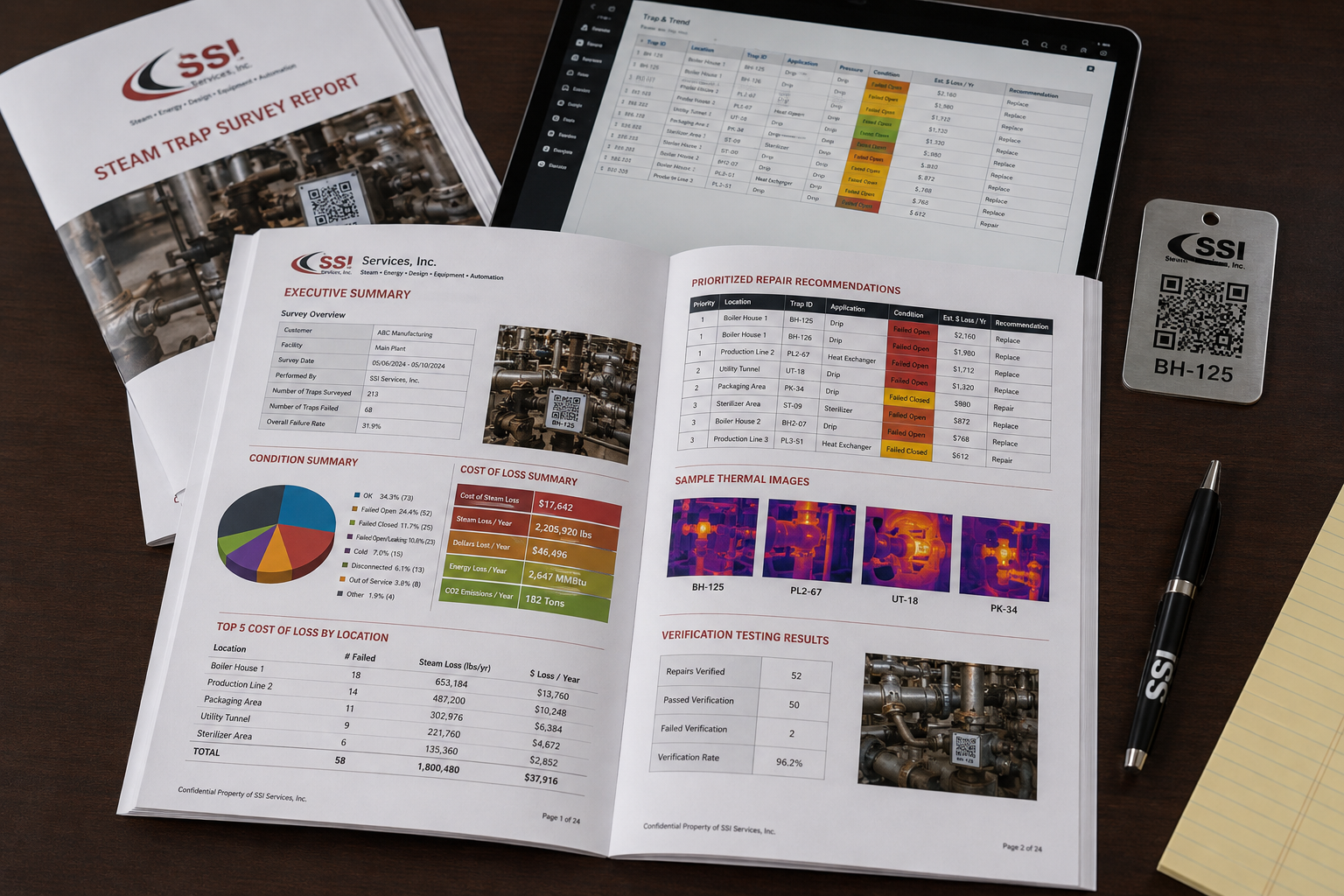
- Trap-by-trap condition classification (functional, failed open, failed closed, non-operational)
- QR-tagged asset inventory with location, application, pressure, and manufacturer documentation
- Cost-of-loss estimates for failed-open traps
- Prioritized repair recommendations with safety and system impact context
- Application and sizing observations where relevant
- Verification testing results following corrective repairs
The report is designed to enable action, not to sit in a file. Repair priorities are sequenced so your maintenance team or SSI’s field crews can begin corrective work immediately.
SSI performs steam trap surveys across North Carolina, Virginia, South Carolina, Georgia, and Tennessee for manufacturers, food and beverage facilities, hospitals, institutions, and federal facilities.
Steam traps are tested using a combination of ultrasonic monitoring, temperature measurement through thermography, and, where possible, visual inspection. No single method is reliable across all conditions, so results must be interpreted together.
A failed-open trap allows live steam to pass into the condensate system, increasing energy loss. A failed-closed trap blocks condensate, leading to water hammer, equipment damage, temperature loss, and system instability.
A steam trap survey is a systematic, instrument-based inspection of every steam trap in a facility’s steam system. Each trap is tested using ultrasonic monitoring, thermal imaging, and visual inspection to determine whether it is operating correctly or has failed in the open or closed position. The survey provides a comprehensive condition assessment of the trap population, including cost-of-loss estimates and repair recommendations.
Most facilities should conduct a steam trap survey at least once per year. Facilities with higher system pressures, larger trap populations, or critical operational environments, including hospitals, pharmaceutical manufacturing, and food processing, benefit from semiannual or quarterly programs. The U.S. Department of Energy recommends regular inspection intervals to keep failure rates manageable.
The terms are often used interchangeably, but in practice, a survey implies a complete, documented assessment of the entire trap population using calibrated instruments, condition records, cost estimates, and repair recommendations. An inspection may refer to a visual check or a less formal review of individual traps. SSI surveys cover every trap in scope using ultrasonic and thermal methods, not visual observation alone.
The annual cost of a single failed-open trap depends on the steam system pressure, the trap orifice size, and the operating hours. On a moderate-pressure system, a failed-open trap can represent several hundred to several thousand dollars per year in wasted steam. Across a facility with multiple failed traps, cumulative losses are significant. SSI provides trap-specific cost-of-loss estimates as part of every survey.
No. Ultrasonic readings must be interpreted alongside temperature measurements and system conditions. Used in isolation, ultrasonic data can produce misdiagnoses, particularly in systems with variable back pressure or unusual operating conditions. SSI uses a multi-method approach because no single instrument is reliable across all trap types and system configurations.
Yes. SSI Services provides the full scope, including survey, prioritized replacement, and verification testing, under a coordinated work plan. We have direct experience performing replacement work in operating facilities, including active healthcare and pharmaceutical environments, where sequencing and coordination are essential to avoiding disruption.
SSI Services works with industrial manufacturers, food and beverage processors, and healthcare facilities, primarily in North Carolina, Virginia, South Carolina, Georgia, and Tennessee. Named clients include Novant Health, the U.S. Department of Veterans Affairs, including seven VA Medical Centers across VISN 6, and pharmaceutical manufacturers.
A survey provides a condition assessment at a point in time. A management program adds recurring survey intervals, condition tracking across inspections, and verification testing after repairs, creating a continuous feedback loop that keeps failure rates low. We structure our work as programs, not one-time events, because steam traps fail continuously, and a single survey does not prevent future failures.
If your facility relies on steam for production, process, or critical operations, the condition of the steam trap directly affects your energy costs, equipment reliability, and system safety.
SSI Services, Inc. performs steam trap surveys across the Southeast (North Carolina, Virginia, South Carolina, Georgia, and Tennessee) for manufacturers, food and beverage facilities, and hospitals.
SSI Services, Inc. | Steam • Energy • Design • Equipment • Automation | ssiservicesusa.com