Steam Quality Testing
Measure the utility conditions reaching the sterilizer, understand what the results mean, and identify where corrective action should focus.
A sterilizer can only work with the utilities supplied to it.
Wet steam, excessive superheat, non-condensable gases, and unsuitable water or condensate conditions can contribute to problems that appear at the sterilizer, instruments, or processed load even when the source of the condition is upstream.
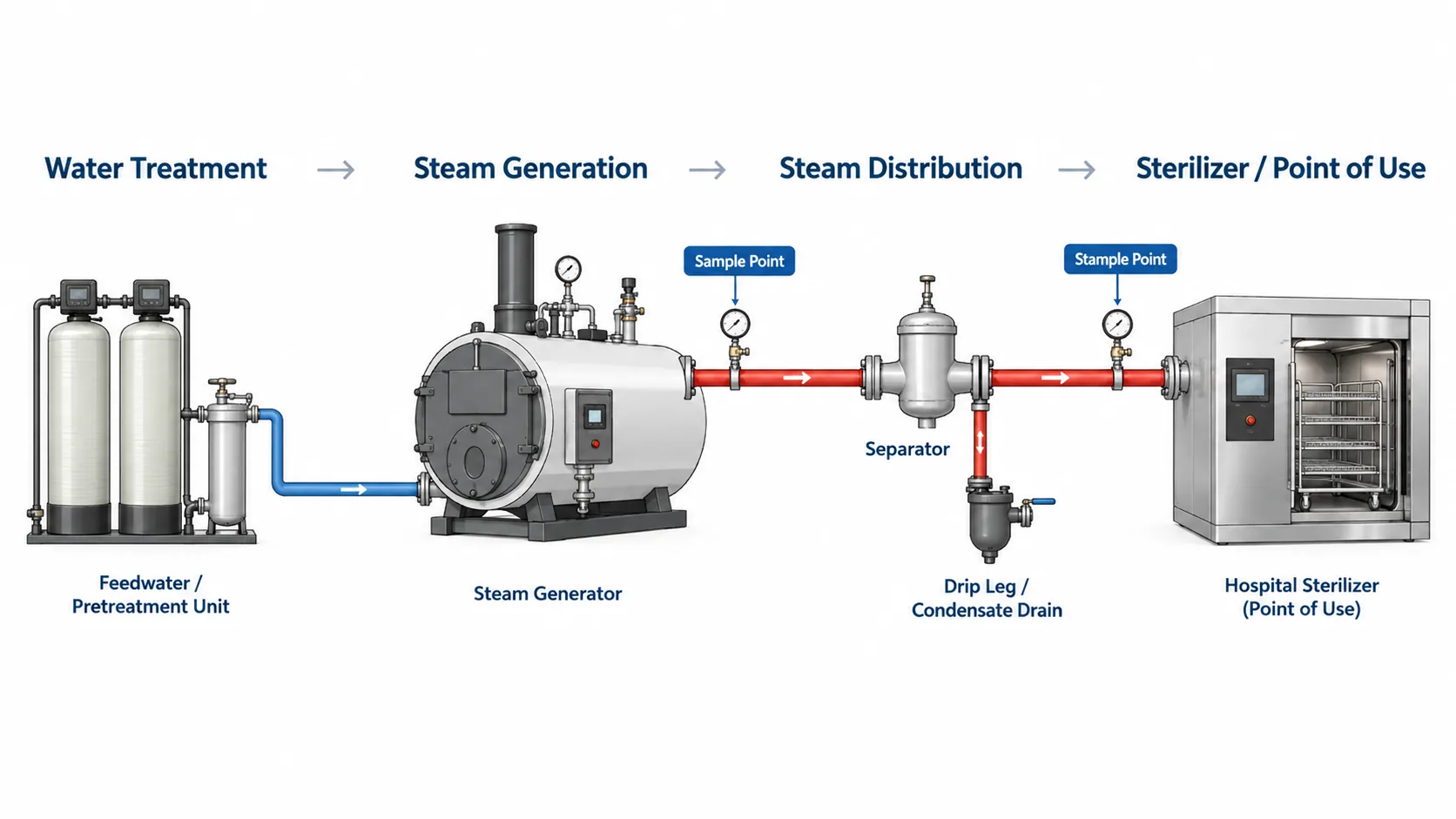
SSI measures the condition at the point of use and considers the steam system behind it. This gives Sterile Processing, Facilities, and Engineering measured information they can use to determine whether the sterilizer, steam supply, water quality, distribution system, or another part of the utility infrastructure requires further investigation.
Jump to Content:
- What Is Steam Quality Testing?
- Why Steam and Water Quality Need to Be Evaluated Together
- When Should Steam Quality Be Tested?
- What SSI Tests
- SSI’s Steam Quality Testing Process
- From Test Result to System-Level Evaluation
- Steam Quality and Water Quality Training
- What You Receive from SSI
- Steam Quality Testing for Healthcare Sterile Processing
- Frequently Asked Questions
- Know What Is Reaching Your Sterilizer
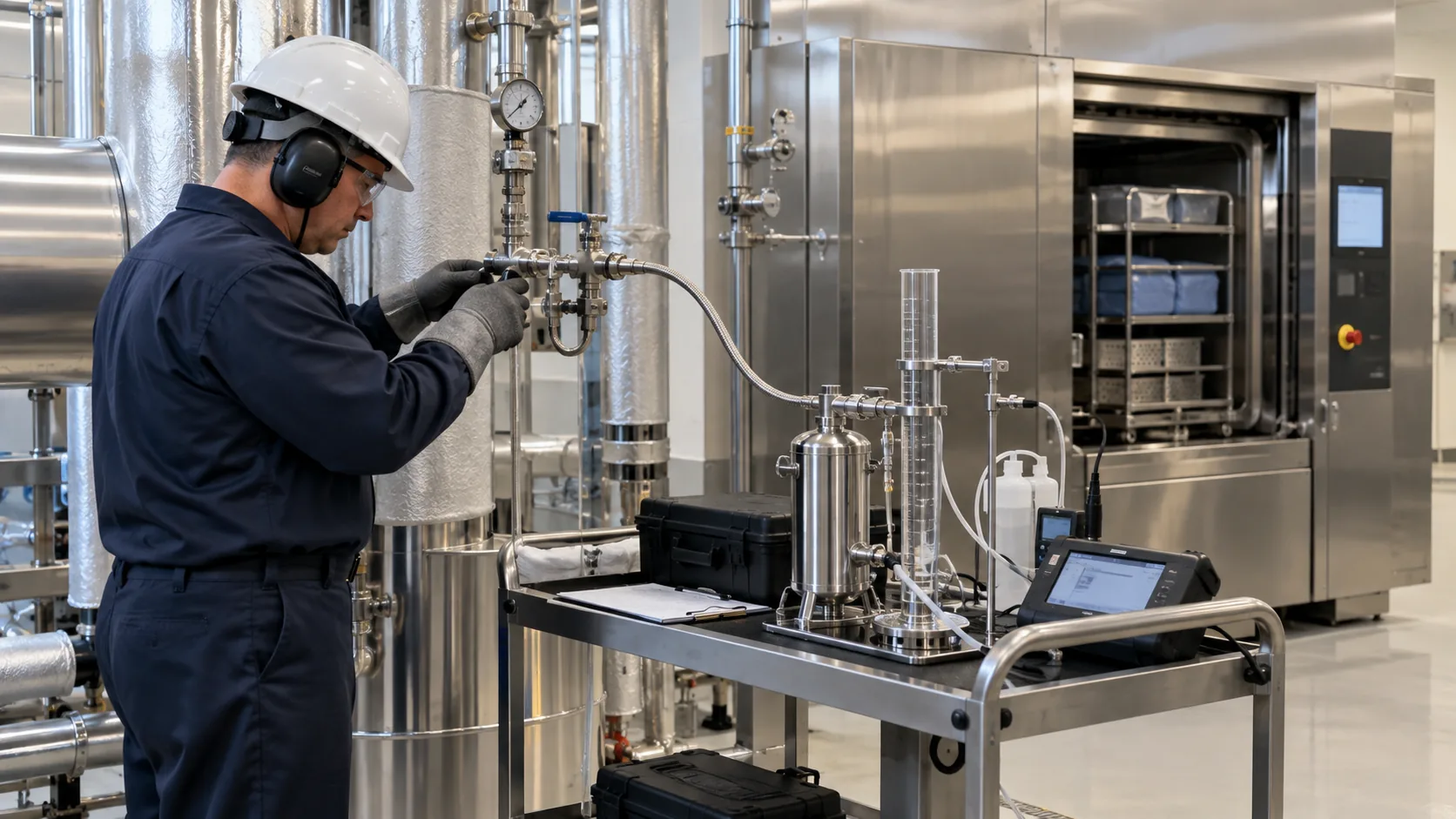
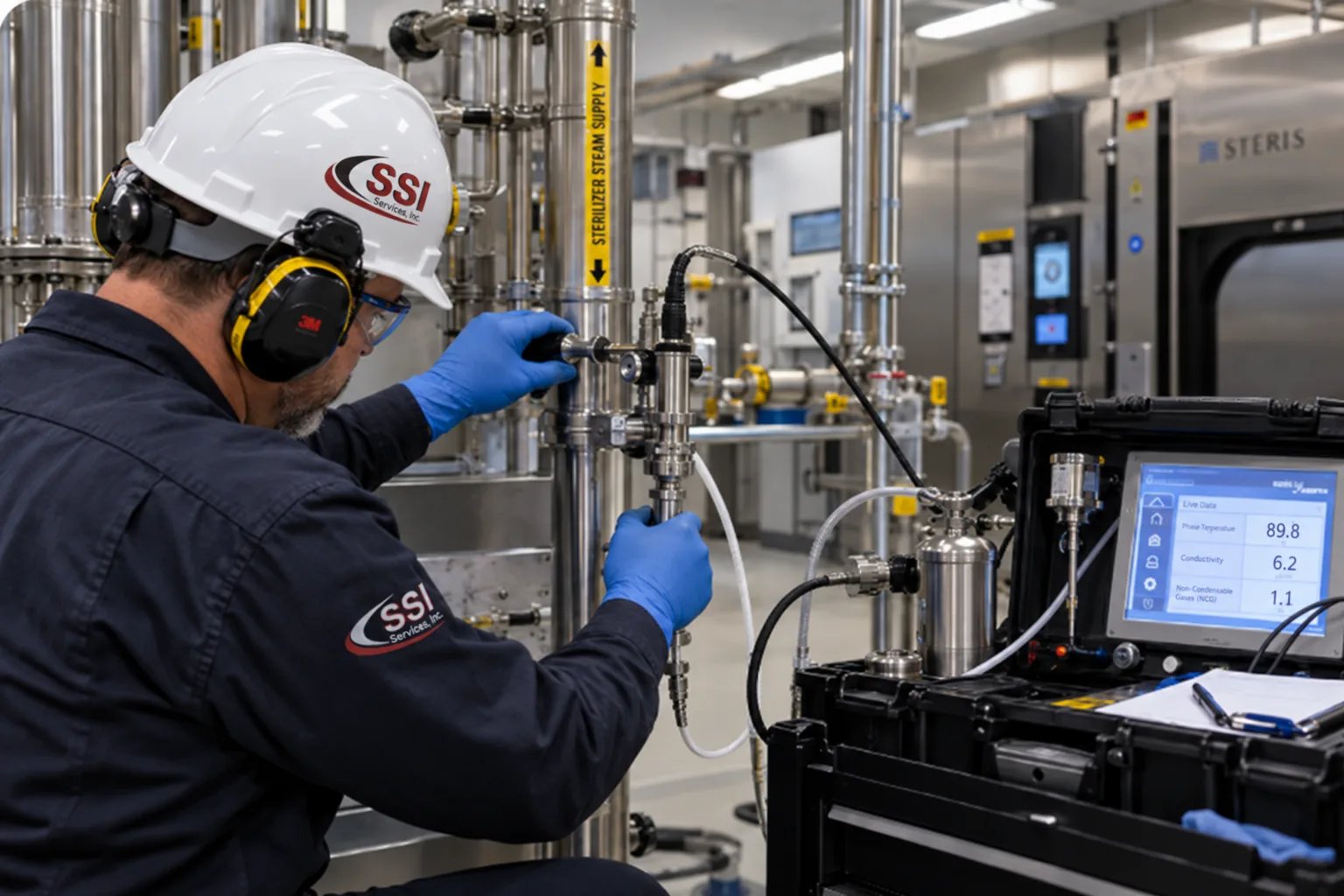
Steam quality testing evaluates characteristics of the steam and supporting utilities that can affect steam sterilization.
SSI’s testing approach addresses two related areas.
Physical Steam Quality
SSI measures:
- Dryness fraction
- Superheat
- Non-condensable gases (NCG)
These measurements support evaluation against applicable physical steam-quality criteria associated with AAMI ST79 and EN 285.
Water and Steam-Condensate Quality
For the AAMI ST108-related portion of SSI’s current testing scope, SSI measures:
- pH
- Conductivity
- Alkalinity
These measurements provide additional information about the water and condensate conditions supporting sterile processing.
The two groups of measurements answer different questions. Acceptable water-related results do not establish acceptable physical steam quality, and acceptable dryness, superheat, and NCG results do not establish acceptable water or condensate conditions.
A complete evaluation considers both.
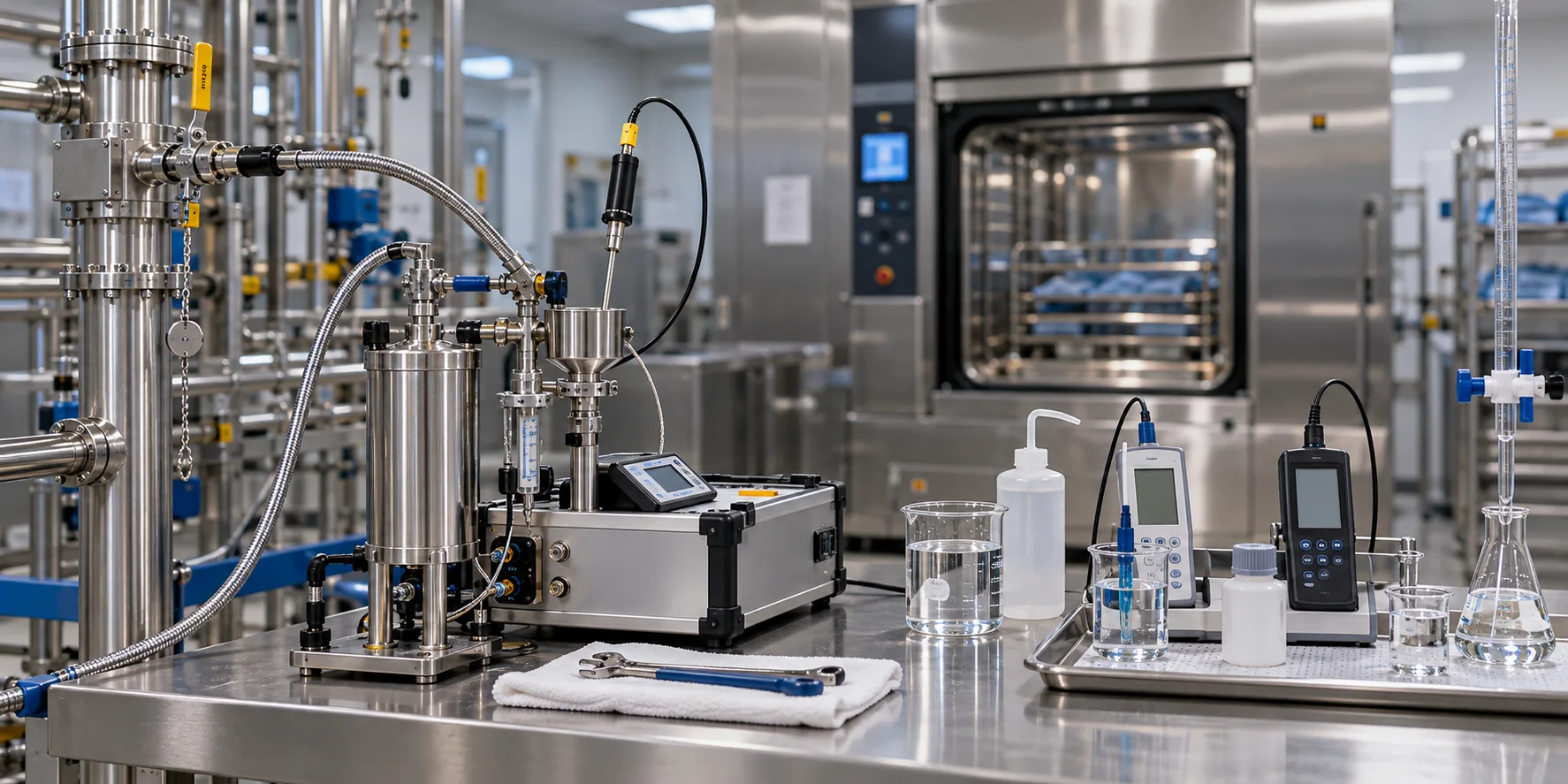
Physical steam quality and water quality describe different characteristics of the utility supplying sterile processing.
A steam supply may meet physical steam-quality criteria while a water or condensate measurement indicates another condition that warrants investigation. The reverse can also occur: water-related measurements may be acceptable while dryness, superheat, or non-condensable gases indicate a physical steam problem.
That distinction matters because different problems can lead the investigation in different directions.
The objective is not simply to determine whether an individual measurement passes or fails. It is to develop a clearer picture of the utility conditions reaching the sterilizer and identify where further evaluation is warranted.
Steam quality testing may be appropriate when a facility is experiencing:
- Wet loads or recurring moisture concerns
- Instrument spotting, staining, residue, or corrosion
- Suspected wet steam
- Excessive superheat concerns
- Suspected non-condensable gases
- Recurring steam-related sterilizer troubleshooting
- Changes to steam generation or distribution
- Changes to water treatment
- New or modified sterilizer installations
- A need to establish baseline utility conditions
- A need to verify conditions following corrective work
These conditions do not prove that steam quality is the cause. Testing provides measured information that helps the facility determine where the investigation should continue.
Dryness Fraction
Dryness testing evaluates the amount of entrained moisture in the steam. Excess moisture can indicate wet steam conditions and may point toward upstream generation, separation, drainage, distribution, or operating issues.
Superheat
Superheat testing determines whether the steam temperature is excessively above the saturation temperature associated with its pressure.
Non-Condensable Gases
Non-condensable gas testing evaluates gases present in the steam that do not readily condense with the steam.
pH
pH provides information about the acidity or alkalinity of the sampled water or condensate.
Conductivity
Conductivity provides an indication of ionic content in the sampled water or condensate.
Alkalinity
Alkalinity provides information about the water’s capacity to neutralize acids and adds another measure of the chemistry associated with the utility system.
SSI interprets each result within the defined testing scope rather than treating any one measurement as a complete assessment of the system.
1. Review the Application
SSI reviews the sterilizer, steam source, available utility information, reported concerns, previous results, and reason for testing.
2. Define the Testing Scope
SSI establishes the required measurements, test locations, operating conditions, access requirements, and applicable evaluation criteria before field work begins.
3. Perform Field Testing
SSI collects the defined physical steam-quality and water-related measurements under appropriate operating conditions.
4. Document the Results
Results are organized by test location and measurement and compared with the applicable criteria defined for the engagement.
5. Identify Follow-Up Priorities
When results indicate a condition requiring further investigation, SSI helps determine whether the next step should focus on steam generation, distribution, drainage, water treatment, operating conditions, the sterilizer interface, or another portion of the system.
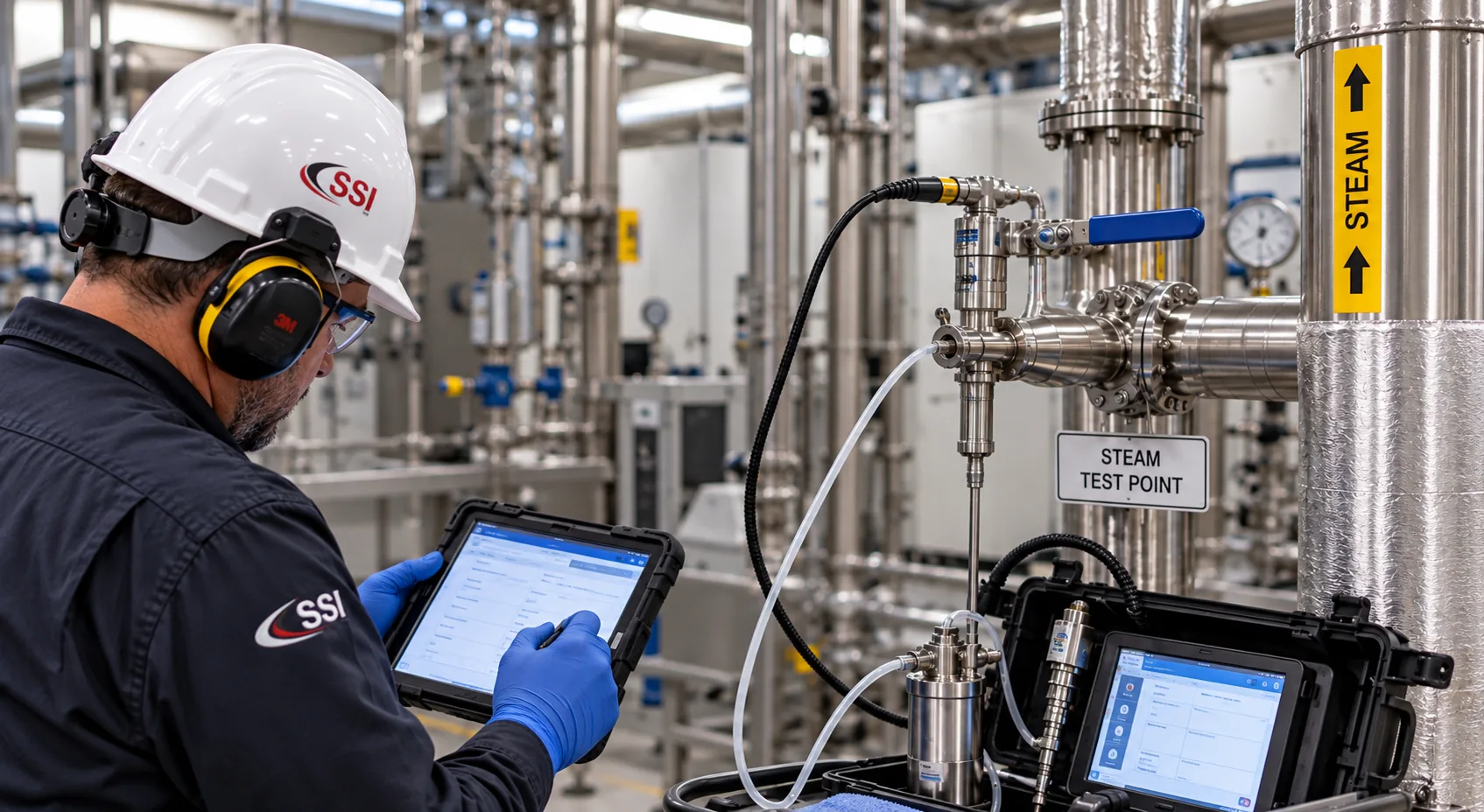
A measurement is useful only if the facility can determine what to do with it.
When a result falls outside the applicable criteria or indicates an unexpected condition, SSI can help evaluate the steam and condensate system for contributing factors.
Depending on the finding, further evaluation may include:
- Steam generation
- Feedwater or water-treatment conditions
- Steam distribution
- Separation and drainage
- Steam traps
- Piping configuration
- Insulation
- Operating conditions
- Pressure conditions
- The connection between the steam system and sterilizer
This system-level capability distinguishes SSI’s approach from testing that ends with a series of readings.
SSI can help Facilities, Engineering, Sterile Processing, OEMs, and other service providers work from the same measured information and determine an appropriate corrective path.
Testing establishes the condition. Training helps the organization understand and manage it.
SSI provides training related to:
- AAMI ST79 steam-quality principles
- AAMI ST108 water-quality principles
- EN 285 steam-quality testing concepts
- Dryness fraction
- Superheat
- Non-condensable gases
- pH, conductivity, and alkalinity
- Test methods and result interpretation
- How steam generation and distribution affect point-of-use conditions
- Coordination among Sterile Processing, Facilities, Engineering, OEMs, and utility-service providers
Training may be incorporated into a testing engagement or provided as a separate facility program.
SSI’s training supports understanding and implementation.
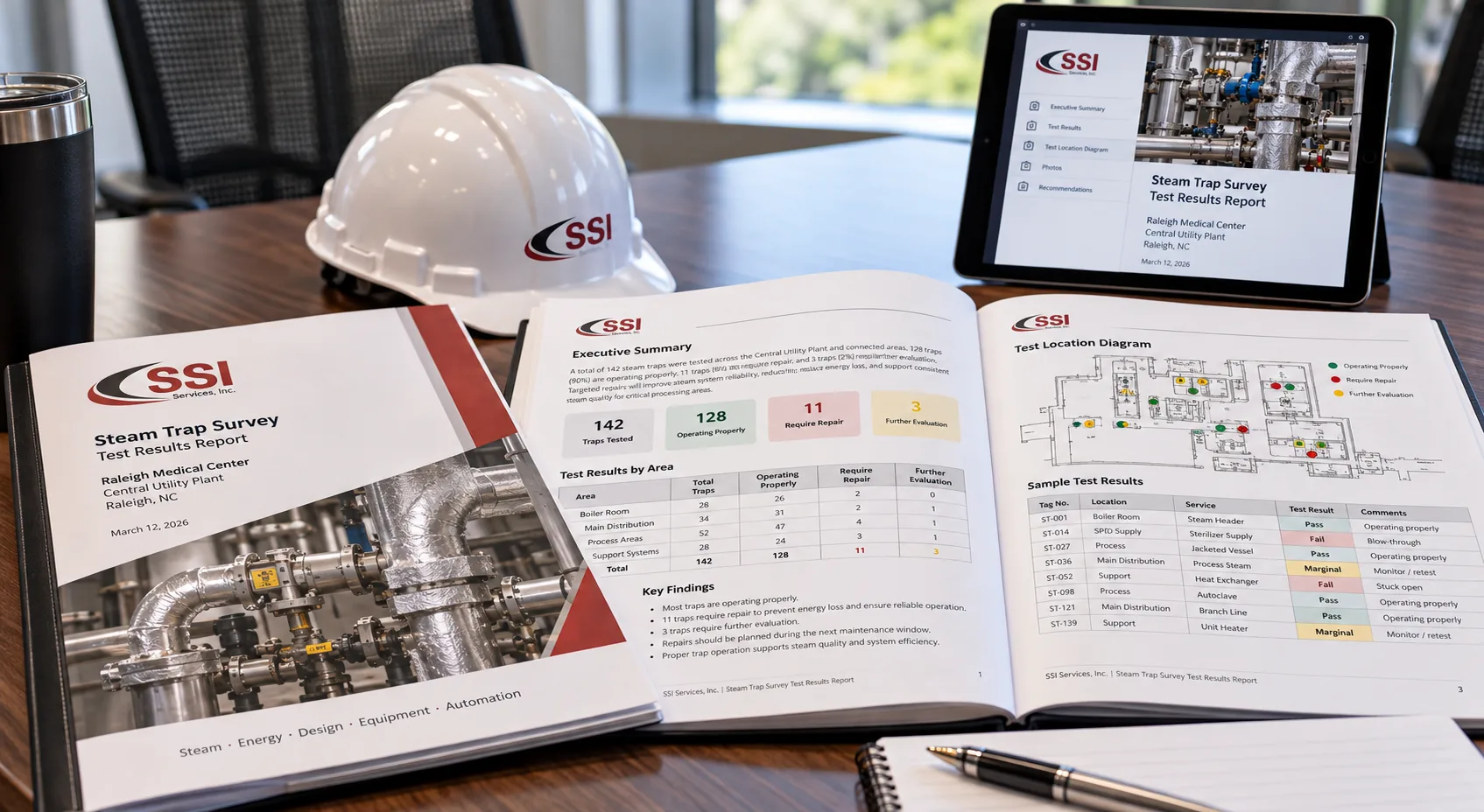
SSI provides a documented record of what was tested, what was measured, and where further attention may be required.
Depending on the defined scope, the deliverable may include:
- Test locations
- Operating conditions
- Dryness fraction results
- Superheat results
- Non-condensable gas results
- pH results
- Conductivity results
- Alkalinity results
- Applicable evaluation criteria
- Identification of measurements requiring follow-up
- Relevant field observations
- Recommended next steps
- System-evaluation priorities where appropriate
The deliverable gives Sterile Processing, Facilities, Engineering, OEMs, and other responsible stakeholders a common technical basis for determining what happens next.
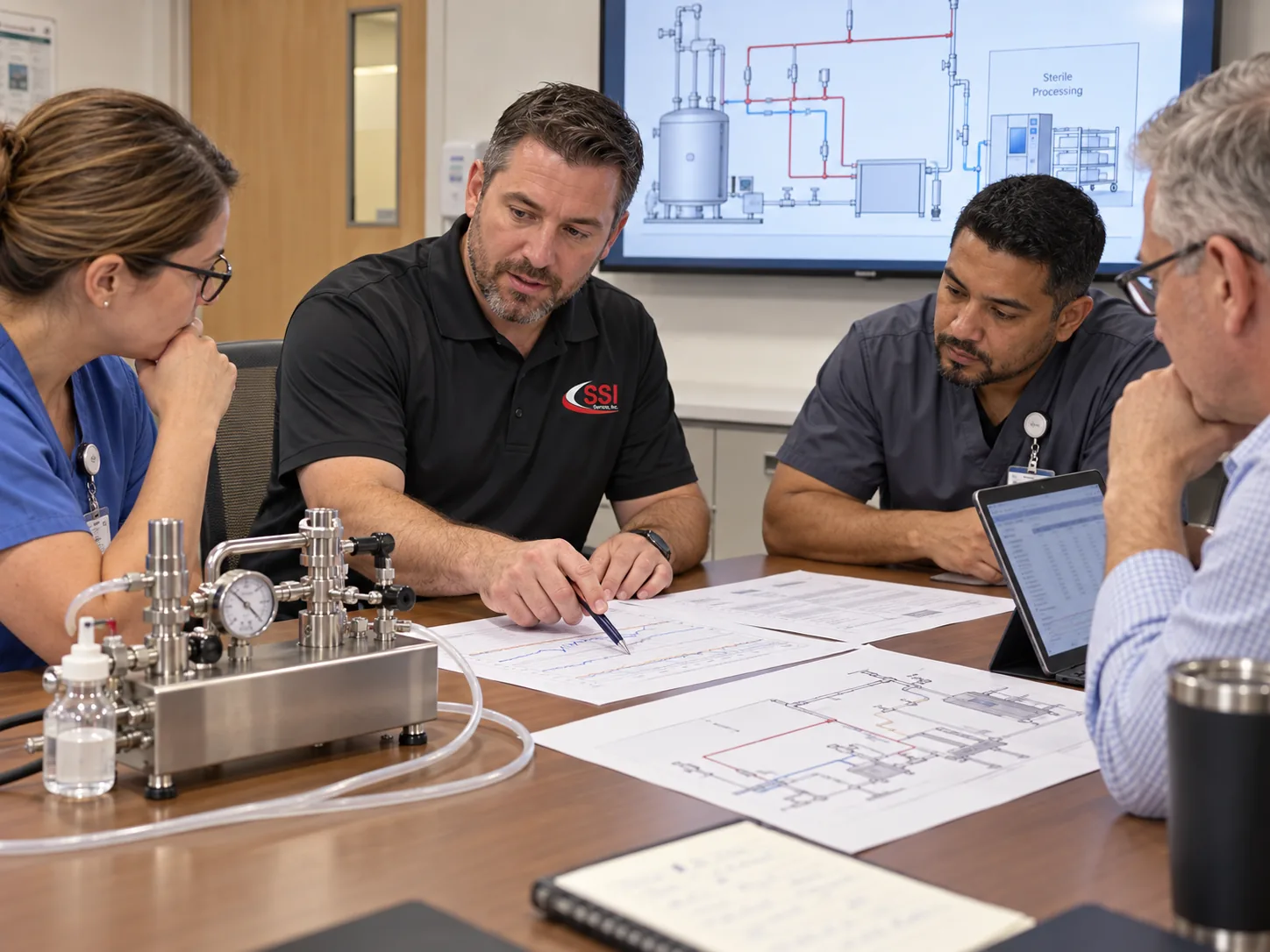
Steam quality crosses departmental boundaries.
Sterile Processing sees the results at the sterilizer. Facilities and Engineering manage the infrastructure supplying it. OEMs support the sterilizer. Water-treatment and steam-system specialists may be responsible for different portions of the utility system.
SSI helps connect those functions around measured conditions.
That becomes particularly valuable when equipment troubleshooting has already occurred but the underlying cause remains unclear.
SSI’s physical steam-quality testing includes dryness fraction, superheat, and non-condensable gases. For the current AAMI ST108-related scope, SSI also measures pH, conductivity, and alkalinity.
Yes. SSI performs physical steam-quality measurements relevant to AAMI ST79, including dryness, superheat, and non-condensable gases.
SSI documents and evaluates the tested parameters.
AAMI ST79 addresses steam sterilization and sterility assurance in healthcare facilities. AAMI ST108 addresses water used in the processing of medical devices.
SSI’s service considers relevant portions of both because the physical condition of the steam and the supporting water/condensate conditions provide different information about the utilities serving sterile processing.
EN 285 establishes requirements and test methods for large steam sterilizers and includes physical steam-quality considerations such as dryness, superheat, and non-condensable gases.
No. Different measurements evaluate different characteristics.
Acceptable dryness, for example, does not establish acceptable non-condensable gas or water-related results. Findings should be interpreted together and within the defined testing scope.
Yes. SSI can help determine whether further evaluation of the steam generation, distribution, drainage, water-treatment, operating, or equipment interface is appropriate.
Yes. SSI provides training related to AAMI ST79, AAMI ST108, EN 285, steam-quality testing, water-quality principles, result interpretation, and the relationship between the utility system and point-of-use conditions.
Steam-quality problems can originate well before the steam reaches the point of use.
SSI measures the condition, documents the results, and helps your team determine where investigation should go next.
An SSI technical specialist will review the application, operating concern, available utility information, testing requirements, and access conditions before defining the appropriate scope.