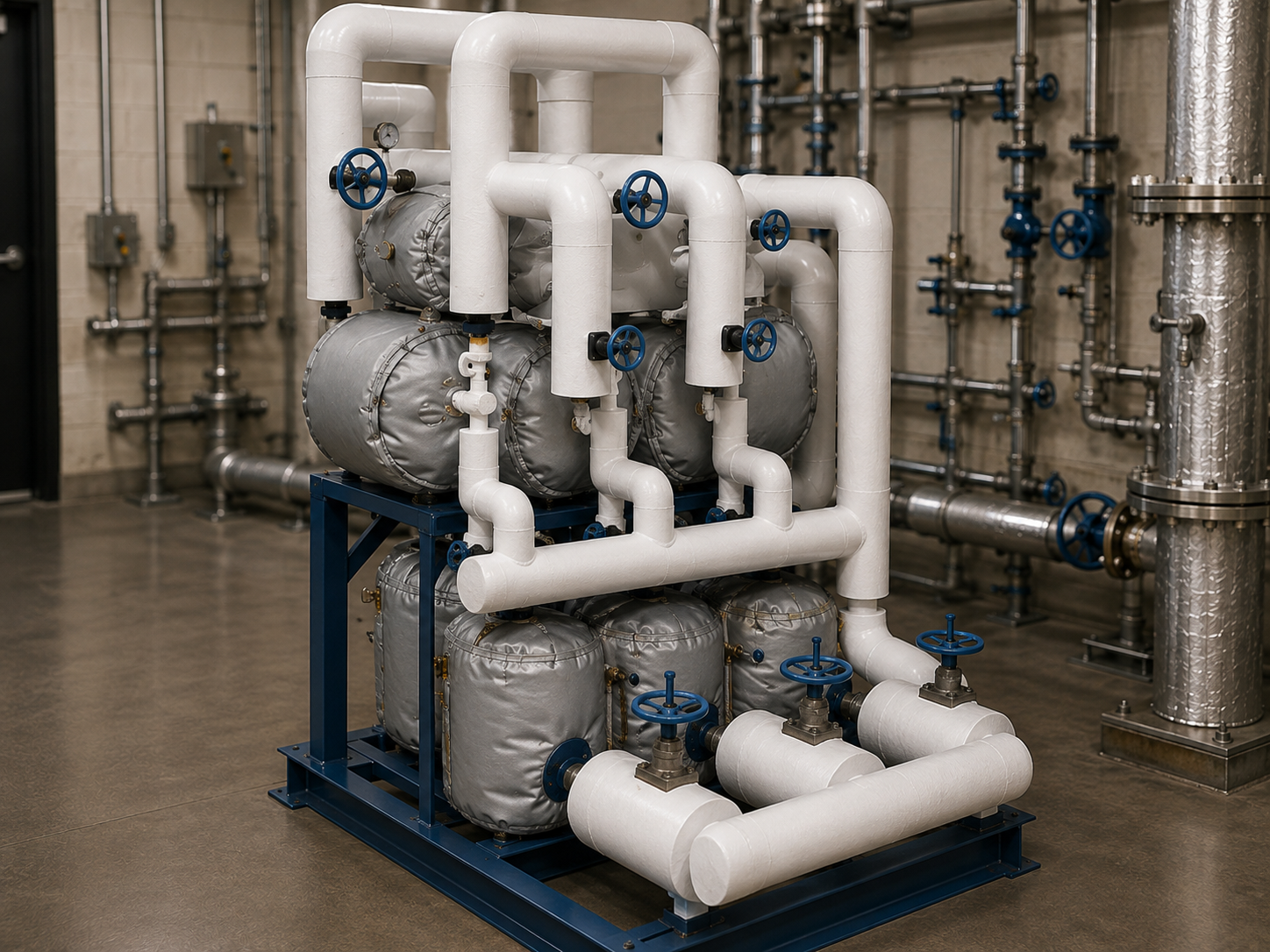
Steam System Design Services
Steam system design influences every aspect of system performance, from heat transfer and pressure stability to condensate drainage, equipment reliability, energy efficiency, and long-term operating costs. Decisions made during design directly affect how safely and efficiently a facility operates throughout the life of the system.
SSI Services, Inc. partners with facility owners, consulting engineers, contractors, and maintenance teams to design steam and condensate systems that perform in real operating environments. Our approach balances engineering best practices with decades of field experience to ensure systems can be installed, operated, maintained, and expanded without creating unnecessary reliability or maintenance issues.
Steam System Assessment Services
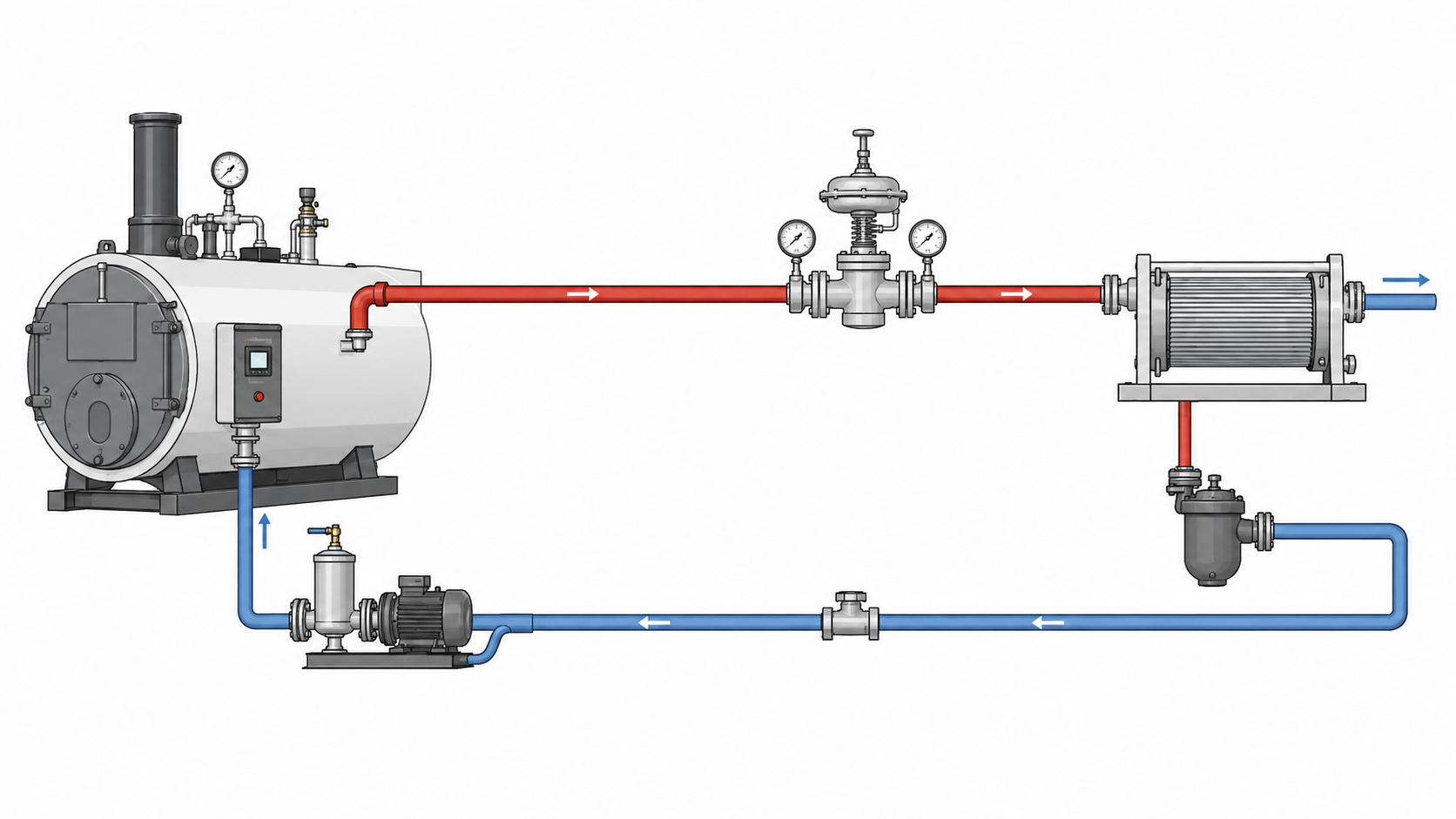
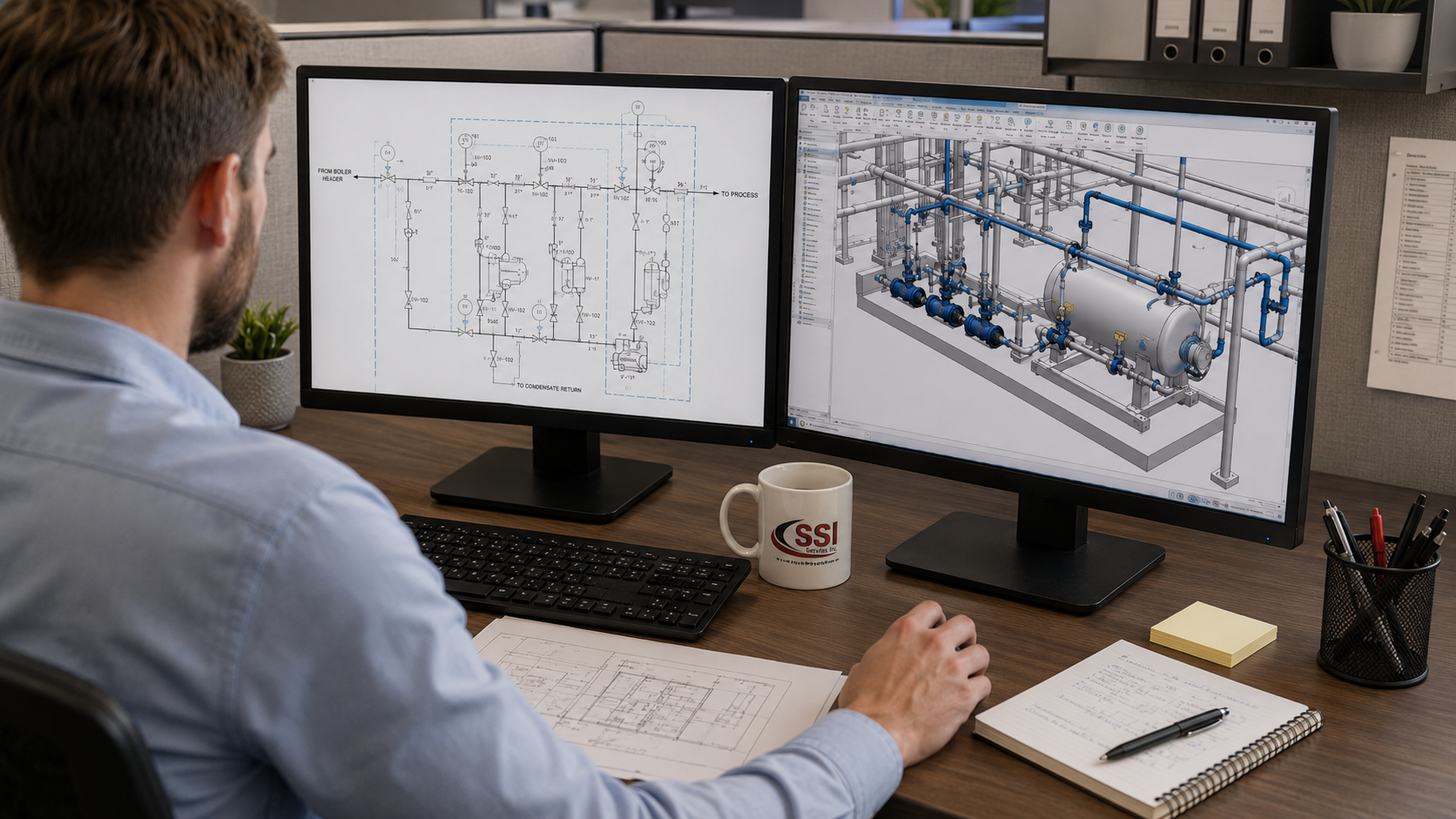
Steam system design connects generation, distribution, pressure control, point-of-use equipment, condensate drainage, and return.
Speak With an SSI Steam System Specialist
Jump to Content:
- What Is a Condensate Return System?
- Why Condensate Return Matters
- How Condensate Return Affects Steam System Efficiency
- What Causes Condensate Return Problems?
- What SSI Evaluates
- Condensate Return Review vs. Steam Trap Survey: Why the Distinction Matters
- Common Problems SSI Identifies
- SSI Condensate Return System Review
- Industries and Applications
- When to Schedule a Condensate Return System Review
- Industries and Applications
- When to Schedule a Condensate Return System Review
- What You Receive from SSI
- Frequently Asked Questions
- Request a Condensate Return System Review
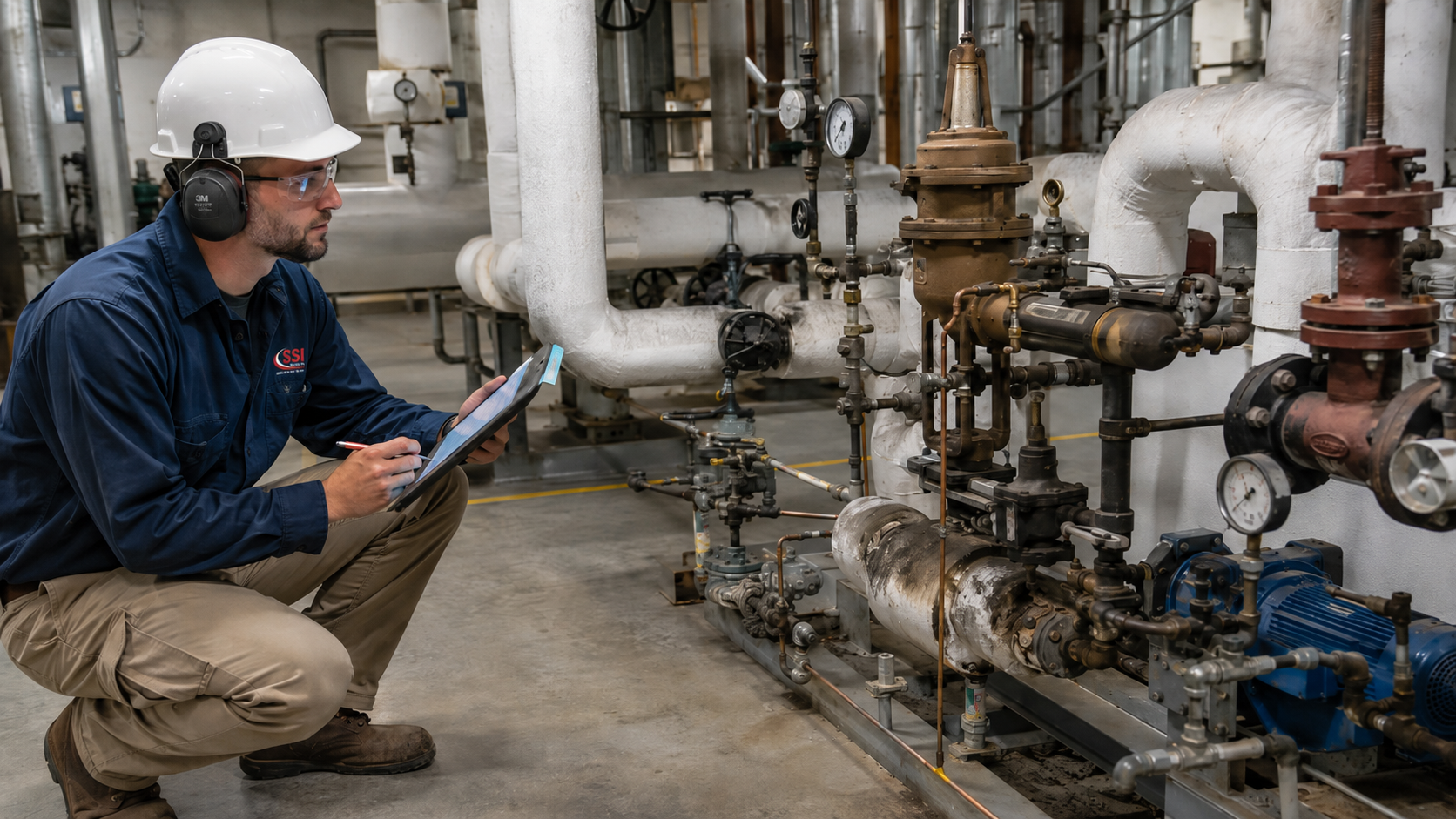
Steam system design is the engineering and practical planning of how steam is generated, distributed, controlled, used, drained, and returned within a facility.
A complete steam and condensate design should consider how the system will perform under real operating conditions, not just how it appears on a drawing. That includes pressure zones, load changes, startup conditions, condensate formation, drainage points, trap stations, pressure reducing valves, heat exchangers, control valves, flow measurement, insulation, venting, access, and return capacity.
Steam systems are often modified over time as equipment is added, relocated, replaced, or repurposed. Without design review, those changes can create problems that show up later as water hammer, wet steam, slow heat-up, trap failure, temperature instability, pump failures, live steam loss, and recurring maintenance calls.
SSI helps facility teams and project stakeholders design, review, and improve steam and condensate systems so the installed system supports the process, the equipment, and the people responsible for keeping it running.
Steam is a high-value utility. When the system is designed well, it supports safe and stable process performance, efficient heat transfer, safe drainage, reliable equipment operation, and lower long-term maintenance cost.
When the design is incomplete or misapplied, the effects compound across the facility. Poor steam system design can contribute to:
- Catastrophic safety events.
- Production instability / inefficiencies.
- Water hammer and mechanical stress
- Wet steam and condensate carryover
- Inconsistent heat transfer
- Slow equipment warm-up
- Pressure instability at the point of use
- Failed or misapplied steam traps
- Condensate backup
- Failed condensate pumps or receiver problems
- Live steam loss into the return system
- Excessive flash steam or venting
- Poor access for maintenance
- Inaccurate flow measurement
- Control valve instability
- Premature equipment wear
- Rework during construction or commissioning
- Higher energy, water, sewer, and chemical treatment costs
A good steam system design prevents many of these problems before installation. A practical design also gives maintenance teams the access, isolation, documentation, and component strategy they need to keep the system reliable after turnover.
Steam and condensate system design should address the full path from steam source to point of use and back to the recovery or return point.
Steam Generation and Utility Interface
The design should confirm how the steam source supports the required pressure, load profile, demand variation, startup condition, and future expansion needs. SSI reviews the practical interface between boiler plant conditions, distribution requirements, and downstream equipment needs.
Steam Distribution Piping
Steam distribution design must account for pressure, velocity, load, pipe sizing, routing, insulation, expansion, support, drainage, access, and future serviceability. Poor distribution design can create pressure loss, wet steam, water hammer, and maintenance difficulty.
Pressure Reducing Stations
Pressure reducing stations must be selected, arranged, drained, isolated, and controlled correctly. A pressure reducing package may include pressure reducing valves, bypasses, isolation valves, strainers, separators, safety valves, gauges, controls, and drainage points.
Condensate Drainage
Steam systems must remove condensate continuously and safely. Design should include drip legs, trap stations, drain pockets, separators, proper pitch, startup drainage, and low-point drainage. Drainage problems are a common cause of water hammer, wet steam, unstable heat transfer, and equipment damage.
Steam Traps and Trap Stations
Steam trap selection and station design should match the application, pressure, load, discharge condition, back pressure, access, isolation, and maintenance strategy. Misapplied traps can fail early, block condensate, pass live steam, or create false symptoms elsewhere in the system.
Condensate Return
Condensate return design must address return piping, flash steam, lift, receiver sizing, pump selection, pressure-powered return units, back pressure, check valves, venting, contamination risk, and tie-ins to the boiler feedwater system. The return system must be designed for the actual operating condition, not just the expected condensate volume.
Heat Exchanger and Equipment Connections
Steam-supported equipment needs proper control, drainage, isolation, venting, and condensate removal. Heat exchangers, coils, humidifiers, sterilizers, jacketed vessels, process skids, and unit heaters often fail to perform because the utility-side design does not match the equipment’s operating requirements.
Flow Measurement
Steam flow measurement depends on proper meter selection, straight-run requirements, pressure and temperature compensation, installation location, condensate management, and operating range. Poor meter placement or application can produce misleading data and weaken energy, billing, or performance decisions.
Controls, Automation, and Instrumentation
Steam system design should account for control valve performance, pressure control, temperature control, monitoring points, alarms, sensors, flow data, and system feedback where appropriate. Controls are only as effective as the system design around them.
Isolation, Bypass, and Maintainability
A steam system must be maintainable. Design should include safe isolation, service access, bypass strategy where appropriate, drain points, valve access, component clearances, and practical repair sequencing. A technically correct design that cannot be maintained becomes a long-term operating problem.
Documentation and Turnover
The final design should support construction, startup, commissioning, maintenance, and future troubleshooting. Useful documentation may include drawings, equipment schedules, valve and trap schedules, design assumptions, tie-in details, sequence notes, startup considerations, and corrective action records.
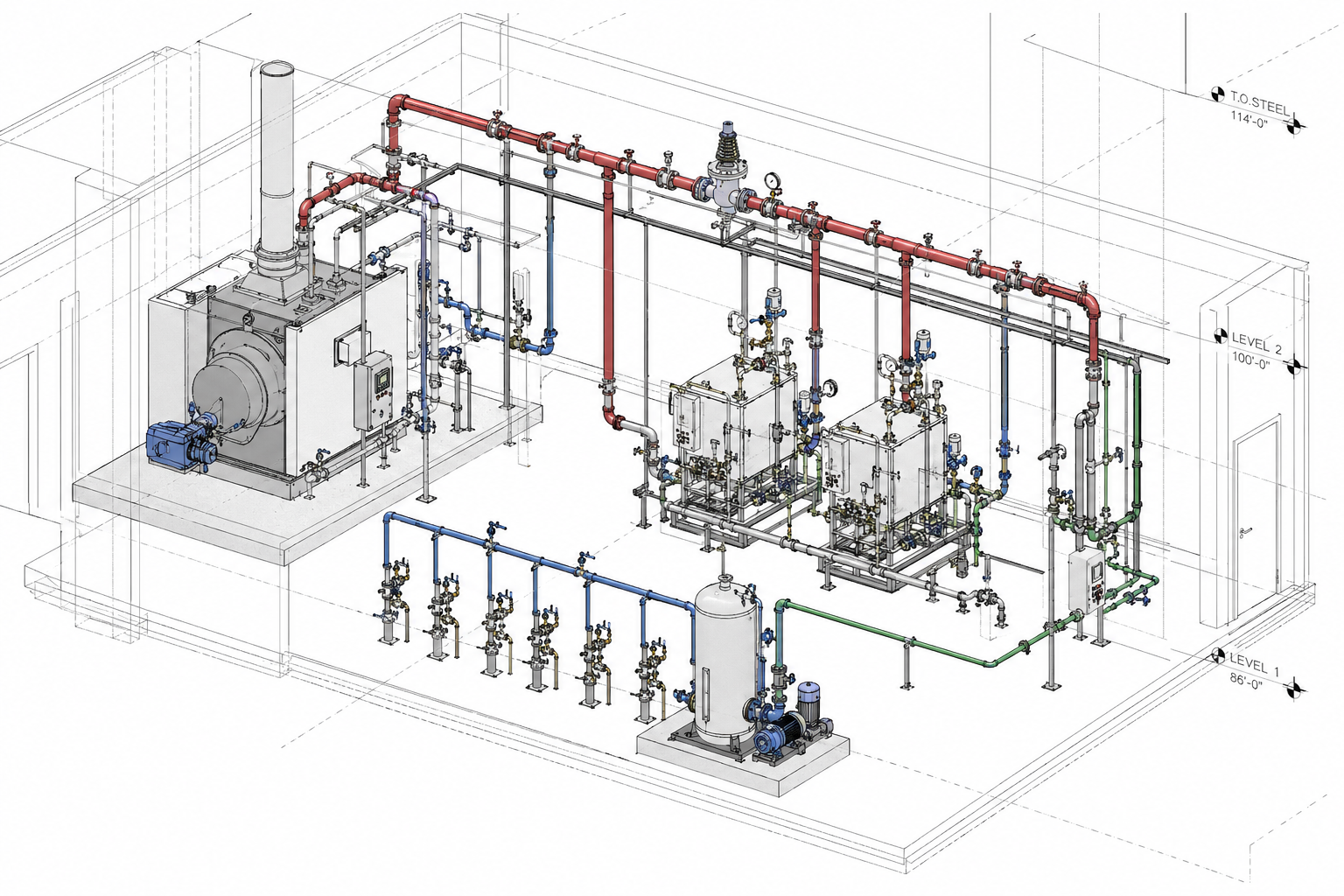
Steam system design problems often come from incomplete assumptions, undocumented facility changes, or designs that do not reflect how the system will operate.
Common causes include:
- Pipe sizing based on incomplete load information
- System expansions completed without reviewing upstream and downstream capacity
- Pressure reducing stations installed without proper drainage or safety considerations
- Steam traps selected without reviewing application, load, pressure, or back pressure
- Condensate return piping that is undersized, poorly routed, or improperly vented
- Poor drainage of steam mains, branches, equipment, or low points
- Missing or misapplied separators, strainers, check valves, and isolation valves
- Control valves applied without reviewing turndown, pressure drop, or condensate behavior
- Heat exchangers connected without proper trap, control, and drainage strategy
- Flow meters installed in locations that do not support accurate measurement
- Inadequate access for inspection, repair, or replacement
- Poor coordination between process equipment, utilities, controls, and construction teams
- Field routing changes that are not reviewed against the original design intent
- Lack of startup, shutdown, and maintenance considerations
- Legacy piping reused without confirming condition, capacity, or suitability
The visible symptom may appear as a failed trap, wet steam, water hammer, unstable temperature, or pump failure. The design issue may be several steps upstream or downstream from the symptoms.
SSI evaluates steam and condensate systems as complete, interconnected utilities rather than isolated pieces of equipment. This systems-based approach allows us to identify potential issues before construction begins.
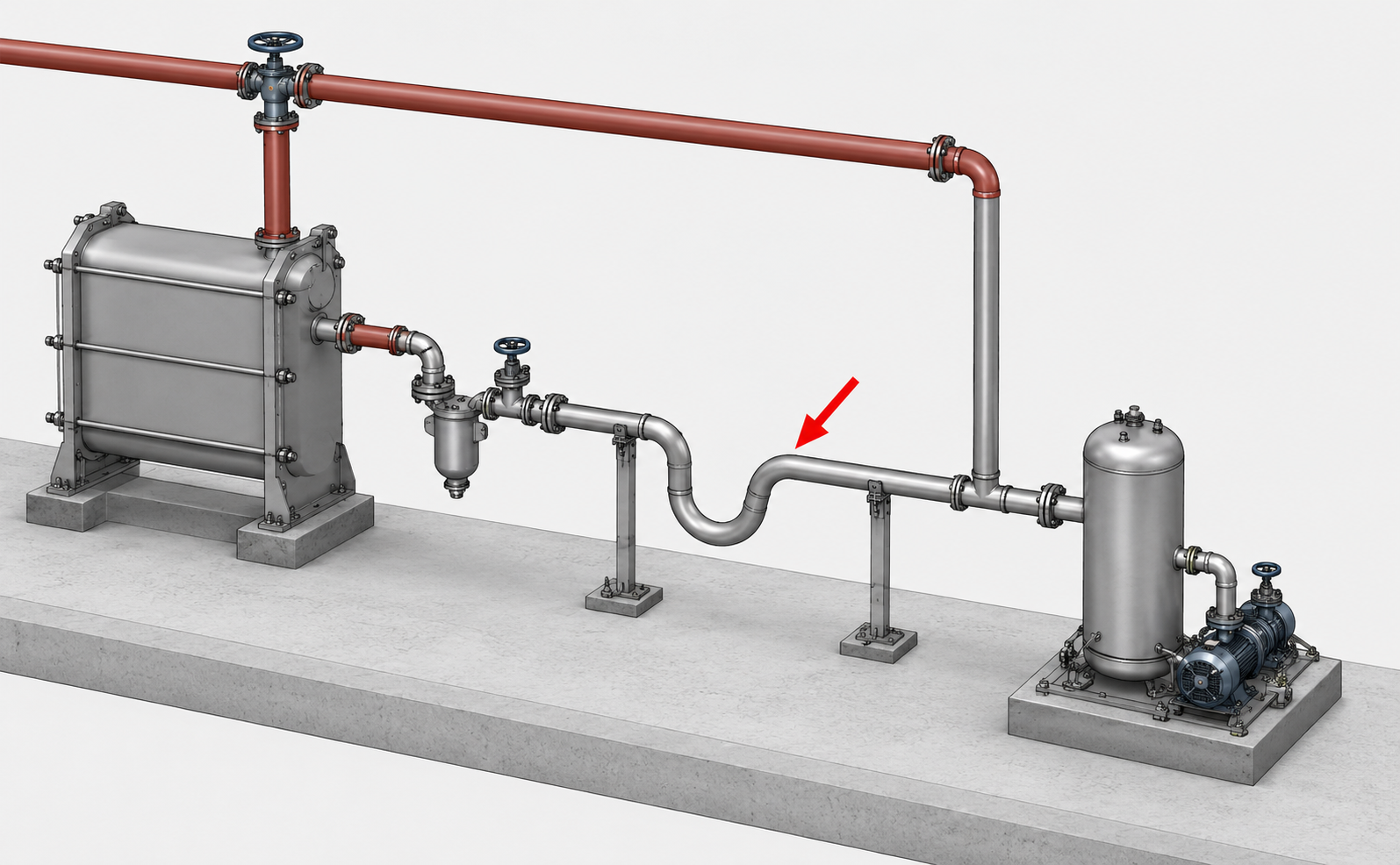
A steam system assessment evaluates how an existing system performs in operation. A steam system design review evaluates whether a planned or modified system is likely to operate, drain, return, and maintain correctly before installation or corrective work is completed.
The two services are closely connected.
A facility may need a steam system assessment when recurring problems already exist. A facility may need steam system design support when it is planning new equipment, system expansion, pressure reduction, condensate return upgrades, heat exchanger changes, flow measurement, or corrective work after an assessment.
In many cases, the best path is both: assess the current system, then design the corrective work around the operating conditions that caused the problem.
SSI supports steam system design needs from early review through practical corrective planning. The scope can be focused on a specific package, system modification, equipment tie-in, or broader steam and condensate design need.
Design Scope Definition
SSI defines the system boundary, operating concern, equipment served, pressure requirements, condensate return path, access constraints, maintenance needs, and desired outcome before design work begins.
Existing System Review
For modifications or upgrades, SSI reviews the existing steam and condensate system conditions that may affect design decisions. This may include distribution piping, pressure zones, trap stations, condensate return, equipment connections, drainage, insulation, and visible field constraints.
Load and Application Review
Steam design depends on load. SSI reviews known or estimated steam demand, process requirements, equipment data, startup conditions, diversity, turndown, and future expansion considerations where available.
Steam and Condensate Layout Review
SSI reviews proposed piping routes, tie-ins, pressure reducing arrangements, trap station locations, condensate return paths, drainage points, access needs, and maintenance considerations.
Package Design Support
SSI can support design considerations for pressure reducing packages, heat exchanger packages, condensate return systems, flow measurement assemblies, and other steam-supported utility packages.
Corrective Design Recommendations
Where the design needs come from an existing problem, SSI connects recommendations to the operating symptoms. The goal is to correct the cause, not only replace the component.
Constructability and Maintainability Review
SSI reviews practical installation and service considerations so the finished system can be accessed, isolated, drained, inspected, and repaired safely.
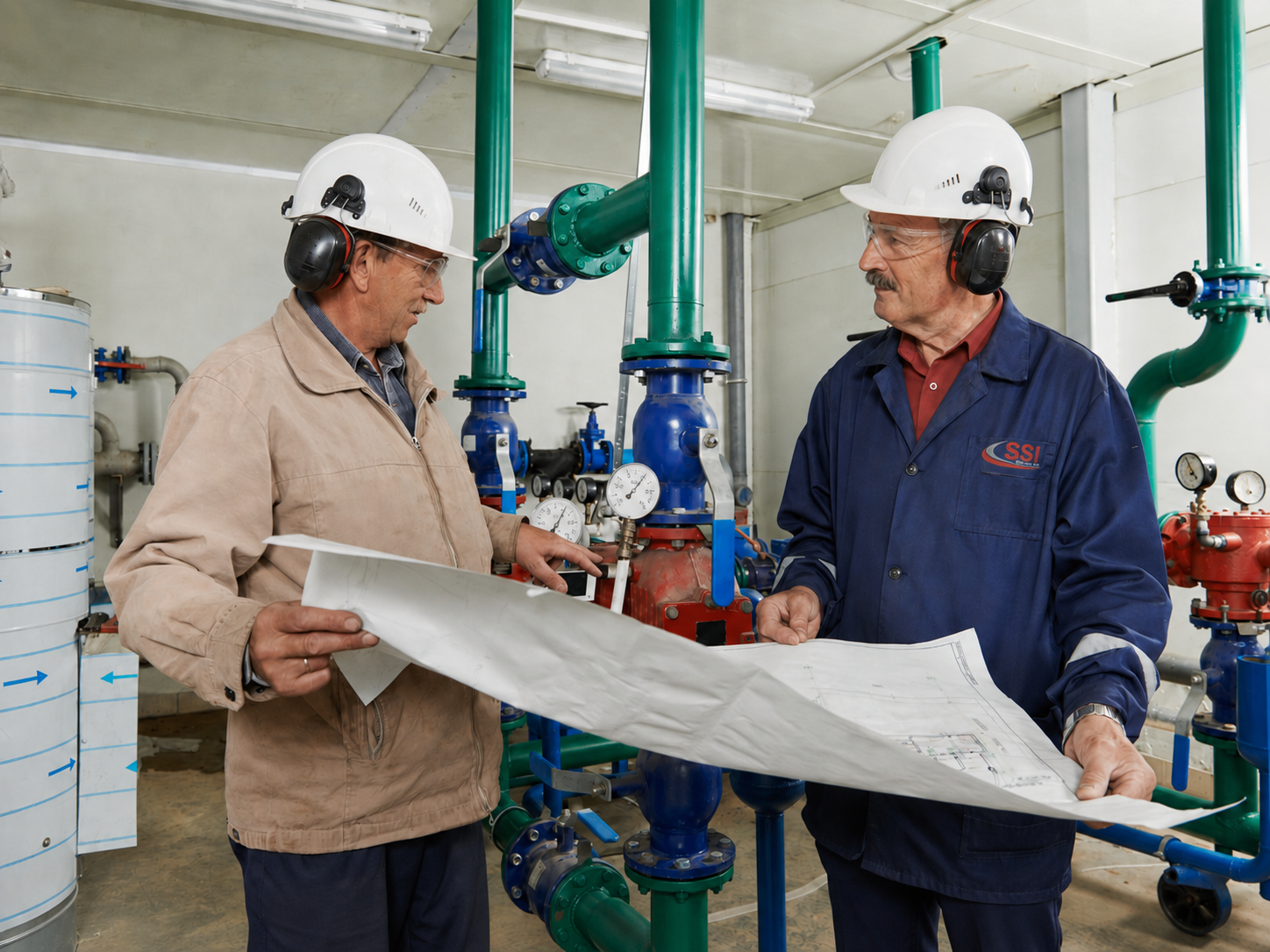
Documentation Support
SSI can support drawings, equipment schedules, design notes, component recommendations, field markups, corrective scopes, and documentation that helps owners, engineers, contractors, and maintenance teams align before work begins.
Pressure Reducing Packages
Pressure reducing packages help facilities deliver steam at the pressure required by downstream equipment. SSI supports practical design considerations for pressure reduction, control stability, drainage, safety, access, and maintainability.
Heat Exchanger Packages
Heat exchanger performance depends on more than the exchanger itself. Steam pressure, control valves, condensate drainage, trap selection, return conditions, and startup behavior all affect performance. SSI supports utility-side design for reliable heat transfer and serviceability.
Condensate Return Systems
Condensate return systems recover hot condensate and return it to the boiler plant or designated recovery point. SSI supports design review for return piping, receivers, pumps, pressure-powered return units, flash steam, back pressure, venting, and return suitability.
Flow Measurement
Steam flow measurement supports energy management, process visibility, cost allocation, and system troubleshooting. SSI supports design considerations for meter type, placement, installation conditions, compensation, access, and data usefulness.
Steam Trap Stations
Trap stations must be accessible, serviceable, properly isolated, and matched to the application. SSI supports trap station design for drip legs, equipment drainage, process loads, condensate return, and verification needs.
Steam Distribution Modifications
Facility expansions, equipment replacements, and process changes often require distribution changes. SSI supports design review for tie-ins, branch connections, pressure loss, drainage, pipe routing, insulation, and maintainability.
Clean Steam and Regulated Environments
Where clean steam, pure steam, sterilization support, or regulated process requirements apply, steam system design must be coordinated with applicable quality, validation, sampling, and documentation expectations. SSI can support practical utility-side review and identify where additional engineering, validation, or testing input may be required.
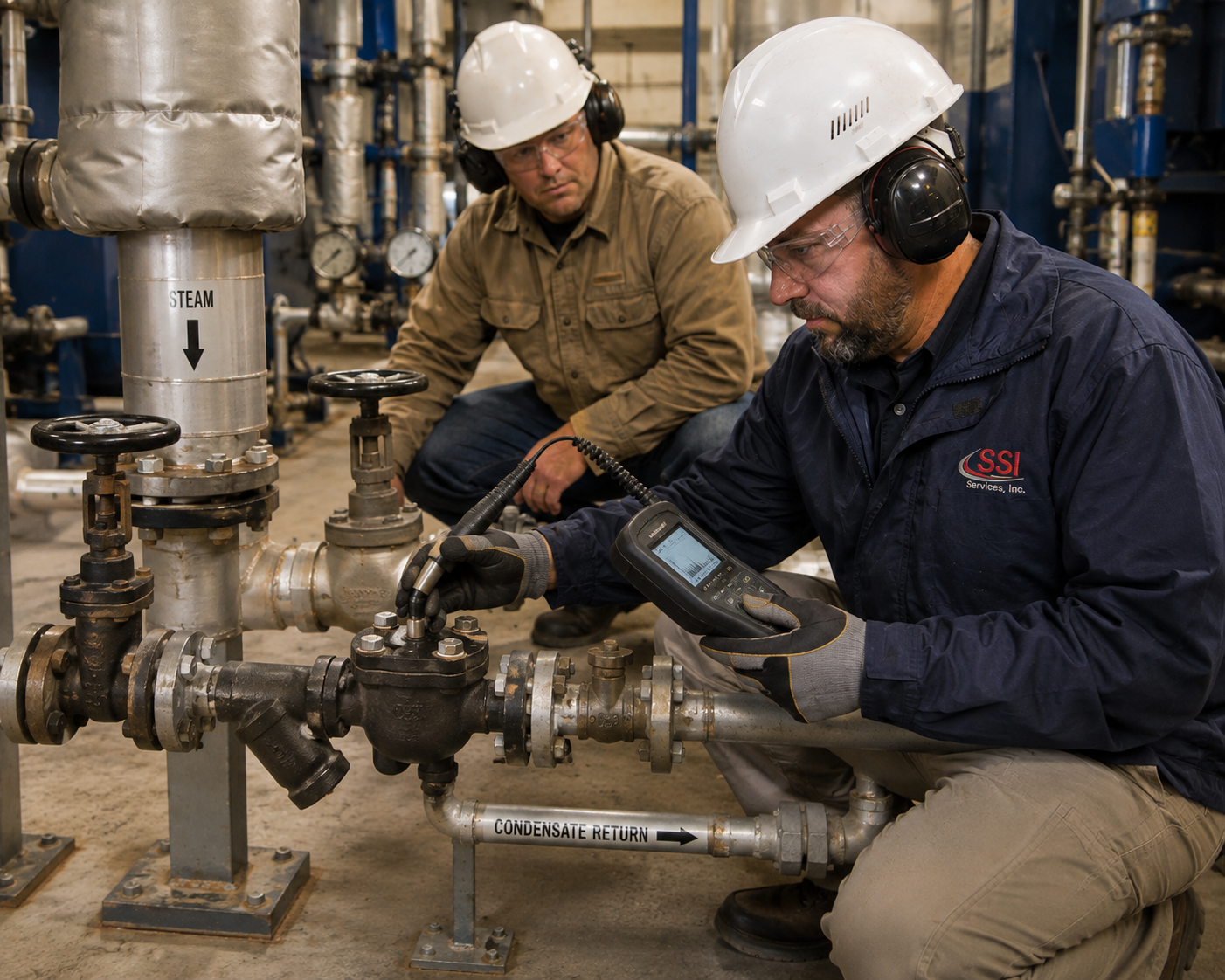
SSI Services has direct field experience with steam system assessment, steam trap survey, trap replacement, condensate recovery, package support, repair planning, and steam system documentation in active industrial, healthcare, institutional, and life sciences environments.
That field experience matters in design. Steam systems often fail not because the drawing had no intent, but because the design did not fully account for drainage, access, operation, startup, shutdown, maintenance, or the actual condition of the facility.
U.S. Department of Veterans Affairs VISN 6: Seven VA Medical Centers
Under a multi-year Energy Savings Performance Contract, SSI conducted steam trap surveys and replacement work across seven VA Medical Centers in North Carolina and Virginia. The work included trap testing, tagging, documentation, removal and replacement of failed radiator and non-radiator traps, associated piping, valves, fittings, and finish restoration. The work was completed in operating hospital environments and during scheduled shutdown windows.
Life Sciences Manufacturing Campus: North Carolina
Following a steam trap survey that identified widespread failure across a campus, SSI replaced 177 failed steam traps under a coordinated work plan that ran alongside condensate recovery upgrades. Work included application-appropriate trap replacements, new strainers, check valves, universal trap stations, verification testing, replacement of three condensate recovery units, and repair of one pressure-powered return unit in an active manufacturing environment.
Industrial Manufacturing
Production facilities and process plants rely on steam for process heating, cleaning, humidification, equipment support, and production uptime. Steam system design helps manufacturers improve reliability, reduce avoidable losses, and support maintainable utility infrastructure.
Food and Beverage Manufacturing
Food and beverage facilities depend on steam for process heating, sanitation, cleaning, washdown, and production consistency. SSI supports steam and condensate design considerations that affect temperature control, reliability, hygiene systems, and energy use.
Healthcare and Hospitals
Hospitals rely on steam for heating, humidification, sterilization support, domestic hot water, and occupied facility operations. Steam system design must account for safety, access, shutdown windows, drainage, reliability, and critical service continuity.
Pharmaceutical and Life Sciences Manufacturing
Life sciences facilities depend on reliable steam-supported utilities for process support, cleaning, sterilization support, humidification, and controlled operations. SSI supports practical steam and condensate design review where utility performance affects equipment reliability, maintenance planning, and operational continuity.
Academic and Institutional Campuses
Colleges, universities, and research campuses often operate distributed steam systems across laboratories, residence halls, dining facilities, classrooms, hospitals, and central utility plants. Steam system design support helps facility teams manage aging infrastructure, system modifications, and long-term maintainability.
Federal Government Facilities
Federal facilities often operate steam systems supporting occupied buildings, healthcare environments, laboratories, maintenance facilities, and central plants. Steam system design review supports reliability, corrective planning, documentation, and practical maintenance execution.
Steam system design support is appropriate when the facility is planning work that affects steam distribution, condensate drainage, pressure control, equipment performance, or long-term maintenance.
Common triggers include:
- New steam-using equipment is being installed
- Existing steam equipment is being replaced or relocated
- A new pressure reducing station or PRV package is required
- A heat exchanger package is being added, modified, or replaced
- Condensate return improvements are being planned
- Flow measurement is needed for energy, production, billing, or performance tracking
- Water hammer, wet steam, condensate backup, or pressure instability has been recurring
- Steam traps are failing repeatedly in the same area
- The facility is expanding production or changing steam demand
- Existing drawings do not match field conditions
- Maintenance teams cannot safely access or isolate components
- Prior repairs have not resolved the underlying problem
- A contractor or engineer needs field-informed steam and condensate input
- A steam system assessment has identified corrective work that requires design review
- The facility wants to avoid rework before construction, commissioning, or startup
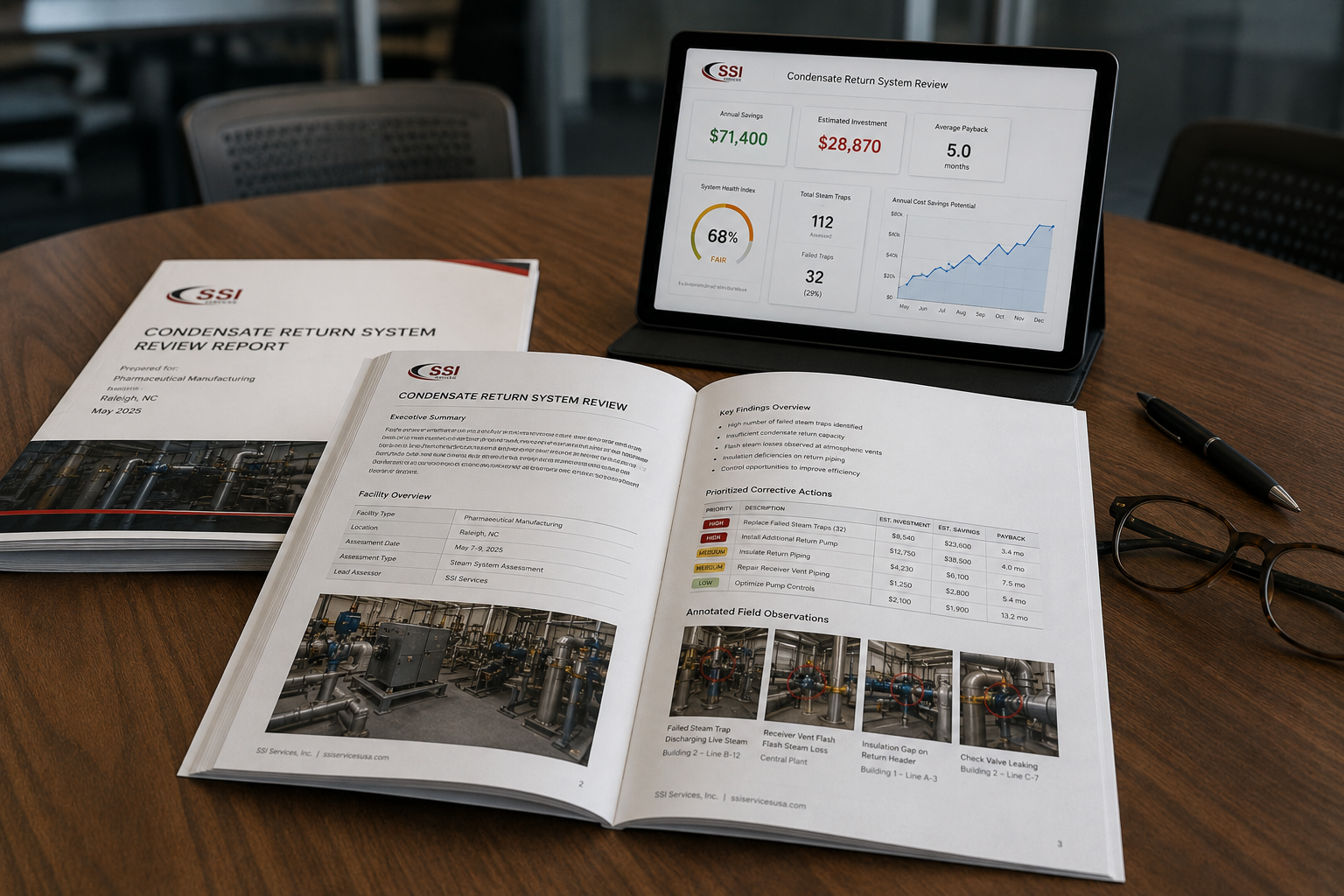
Each steam system design engagement is structured around the facility’s operating needs, project scope, and system condition.
Depending on scope, SSI may provide:
- Steam and condensate system design review
- Field review of existing system conditions
- Steam load and application review
- Steam distribution and pressure zone considerations
- Pressure reducing package design input
- Heat exchanger package design input
- Condensate return system design input
- Steam trap station design recommendations
- Drainage, drip leg, venting, and separator recommendations
- Flow measurement placement and application considerations
- Maintainability and access review
- Isolation, bypass, and serviceability recommendations
- Corrective design recommendations tied to operating symptoms
- Design notes, field markups, equipment schedules, or scope narratives
- Coordination support for owners, engineers, contractors, and maintenance teams
- Recommended next steps for assessment, testing, repair, or installation support
The deliverable is intended to support action. SSI helps your team understand what should be designed, why it matters, and what must be addressed before installation creates new operating problems.
Steam system design is the planning and engineering of how steam is generated, distributed, controlled, used, drained, and returned within a facility. It includes steam piping, pressure control, condensate drainage, trap stations, condensate return, equipment connections, controls, flow measurement, access, and maintainability.
A complete steam and condensate design should include steam load review, pressure requirements, distribution piping, pressure reducing stations, drainage, drip legs, steam traps, condensate return, heat exchanger connections, control valves, flow measurement, insulation, isolation, access, and documentation.
Common causes include incomplete load assumptions, undersized piping, poor drainage, misapplied traps, improper pressure reduction, poor condensate return design, inadequate access, undocumented field changes, control valve issues, and equipment tie-ins that do not match actual operating conditions.
A steam system assessment evaluates how an existing system performs in operation. Steam system design support evaluates planned, modified, or corrective work before installation, so the system can operate, drain, return, and maintain correctly.
Yes. SSI can support pressure reducing package design considerations, including pressure control, drainage, safety devices, isolation, bypass strategy, strainers, separators, gauges, access, and maintainability.
Yes. SSI can support utility-side design considerations for heat exchanger packages, including steam pressure, control valves, condensate drainage, trap selection, return conditions, isolation, startup behavior, and service access.
Condensate return affects energy recovery, drainage, back pressure, trap performance, pump operation, boiler feedwater demand, and system reliability. A steam system design that ignores condensate return can create water hammer, pump failures, heat loss, and recurring maintenance problems.
Yes. Steam quality can be affected by drainage, wet steam, condensate carryover, pressure reduction, separator performance, insulation, startup conditions, and distribution piping. Design decisions can either reduce or create steam quality problems at the point of use.
Request design support before installing new steam equipment, modifying distribution piping, adding a PRV station, replacing heat exchangers, changing condensate return, adding flow measurement, expanding production, or correcting recurring issues such as water hammer, wet steam, condensate backup, or pressure instability.
Yes. SSI can support corrective work where the scope aligns with SSI’s service capabilities and facility conditions. Work may include steam trap replacement, condensate return improvements, package modifications, component replacement, verification testing, and related steam system support.
If your facility is planning steam system modifications, equipment tie-ins, pressure reduction, condensate return upgrades, heat exchanger packages, flow measurement, or corrective work, design decisions made early will affect reliability for years.
SSI Services, Inc. supports steam system design needs across North Carolina, Virginia, South Carolina, Georgia, and Tennessee. We help facility teams design practical steam and condensate systems that perform in the real operating environment.