Steam Trap Monitoring and Management Programs
Ongoing Visibility. Faster Corrective Action. Better Trap Performance.
Steam trap failures do not wait for the next annual survey. A trap can fail open, fail closed, leak, or stop draining properly between inspection cycles. When that happens, the facility may lose live steam, back up condensate, increase the risk of water hammer, and lose visibility into which repairs need attention first.
SSI Services, Inc. helps facilities set up structured steam trap monitoring and management programs. These programs combine trap asset tracking, recurring condition review, wireless monitoring options, corrective action planning, repair and replacement support, verification records, and long-term trap population management.
For facilities that need continuous visibility between inspections, SteamIQ wireless steam trap monitoring products are available through SSI. These products can be incorporated into an SSI monitoring program in which continuous data support energy reduction, maintenance planning, reliability, or critical system oversight.
SSI Services provides steam trap monitoring and management programs for industrial manufacturers, food and beverage facilities, healthcare environments, life sciences facilities, academic institutions, and federal facilities across North Carolina, Virginia, South Carolina, Georgia, and Tennessee.
Set Up a Steam Trap Monitoring Program
Jump to Content:
- What Is Steam Trap Monitoring?
- Why Steam Trap Monitoring Matters
- Steam Trap Survey vs. Steam Trap Monitoring Program
- SSI’s Steam Trap Monitoring and Management Program
- Wireless Steam Trap Monitoring Products Available Through SSI
- When Wireless Monitoring Makes Sense
- What SSI Tracks and Reports
- When to Set Up a Steam Trap Monitoring Program
- Field Experience
- Industries and Applications
- What You Receive from SSI
- Frequently Asked Questions
- Set Up a Steam Trap Monitoring Program
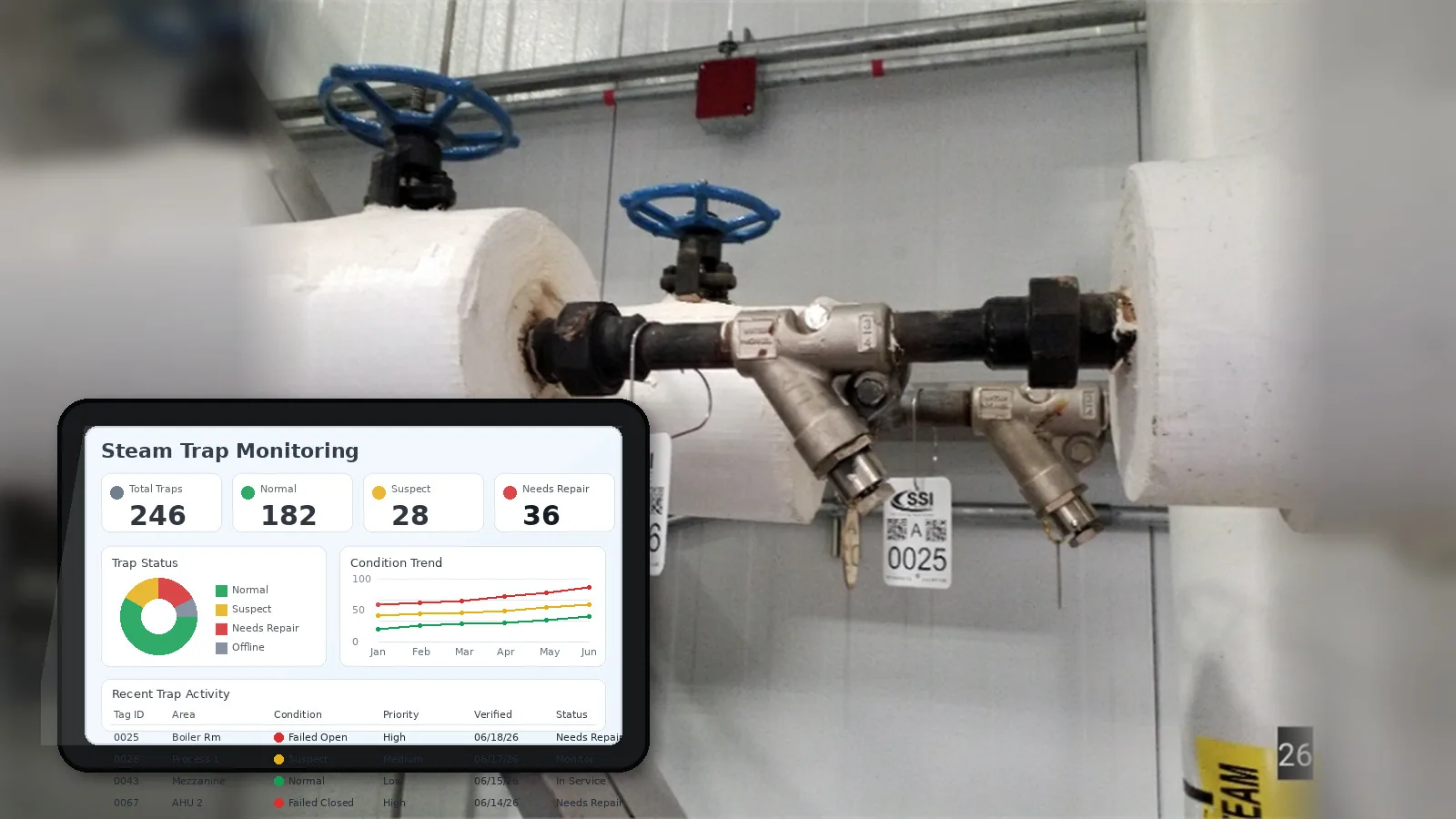
Steam trap monitoring is the ongoing process of tracking steam trap condition, performance, location, repair status, replacement history, and failure patterns across a facility steam system.
A monitoring program may include recurring field inspections, wireless monitoring products, asset tagging, condition reporting, repair tracking, replacement records, verification testing, and long-term review of failure trends.
The objective is simple: keep the trap population visible and actionable after the baseline survey is complete.
A steam trap survey tells the facility which traps are operating correctly at a point in time. A steam trap monitoring program helps the facility manage what happens next.
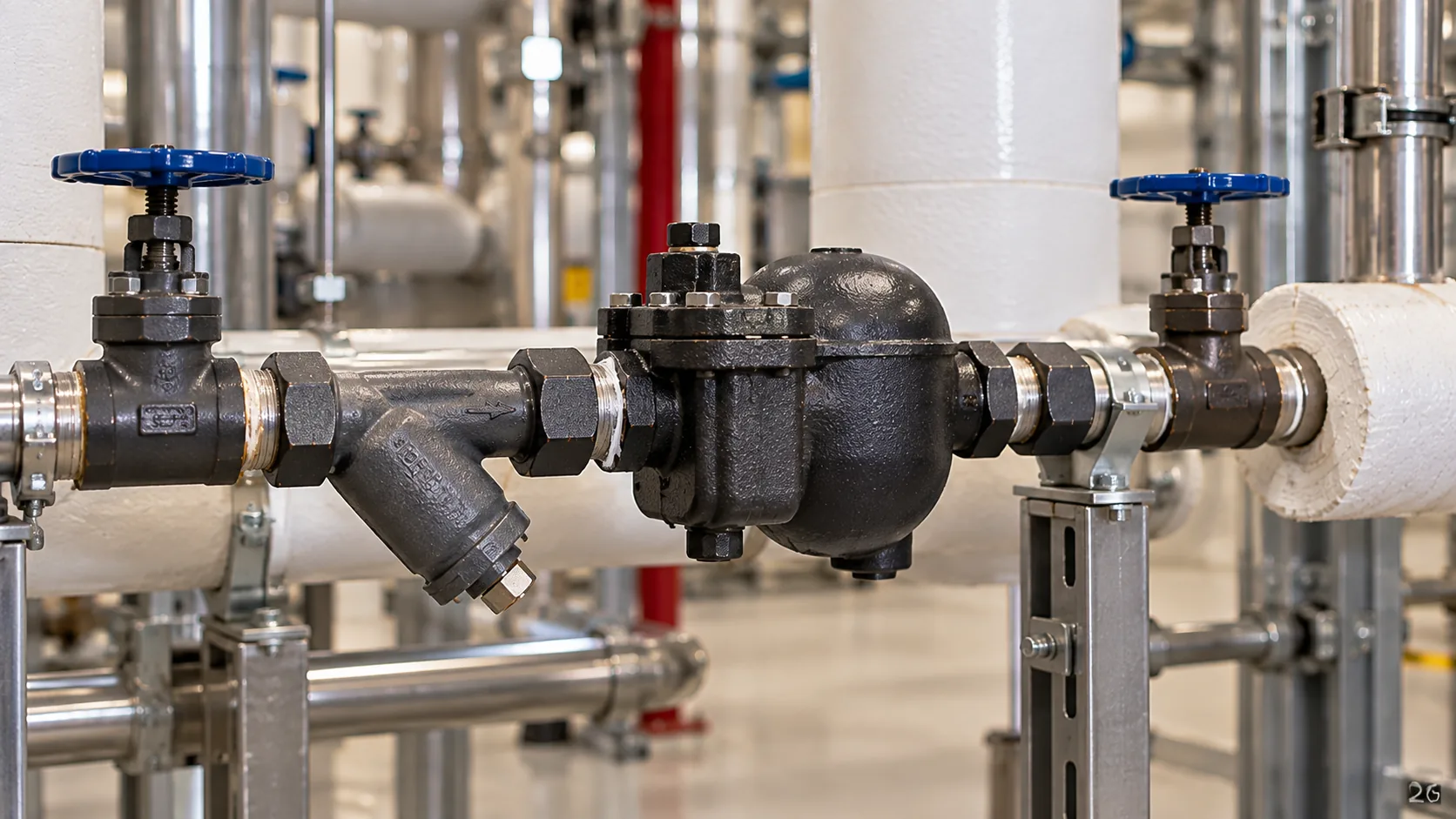
Steam traps are small components with system-wide consequences. When they fail, the impact can move through the steam system quickly.
A failed-open trap can pass live steam into the condensate return system. A failed-closed trap can block condensate, reduce heat transfer, increase water hammer risk, and damage connected equipment. A leaking or misapplied trap can create performance problems that are difficult to identify without consistent tracking.
In large or critical steam systems, trap failures are not isolated events. They become a recurring maintenance, reliability, and energy management issue.
A structured monitoring program helps facilities:
- Identify failed, leaking, blocked, or suspect traps between formal surveys.
- Track which traps have been repaired, replaced, verified, or deferred.
- Prioritize corrective work based on safety, energy impact, equipment criticality, and operating risk.
- Reduce avoidable live steam loss.
- Improve condensate drainage and return system stability.
- Reduce repeat failures caused by application, back pressure, installation, or operating conditions.
- Support energy reduction and sustainability goals.
- Give maintenance, engineering, operations, and leadership a clearer view of trap population health.
The value is not just finding failed traps. The value is keeping the facility from losing control of the trap population over time.
A steam trap survey and a steam trap monitoring program are related, but they are not the same service.
Steam Trap Survey
A steam trap survey is a point-in-time, trap-by-trap assessment of the trap population. SSI uses ultrasonic testing, thermal confirmation, visual inspection where applicable, QR asset tagging and mapping, condition classification, cost-of-loss estimates, repair recommendations, and verification testing after corrective work.
A survey is usually the right first step when the facility lacks current trap data or needs a complete baseline.
Steam Trap Monitoring Program
A steam trap monitoring program is an ongoing management approach. It uses asset records, recurring review, wireless monitoring, repair tracking, replacement history, performance reporting, and verification records to manage the trap population over time.
A monitoring program is the right next step when the facility wants sustained visibility, better repair accountability, and long-term performance control.
Facilities with current trap data may be able to move directly into a monitoring program. Facilities without current data should usually begin with a baseline steam trap survey and mapping of asset location.
Practical Difference
A survey identifies the current condition. A monitoring program keeps the condition visible, managed, and acted on over time.
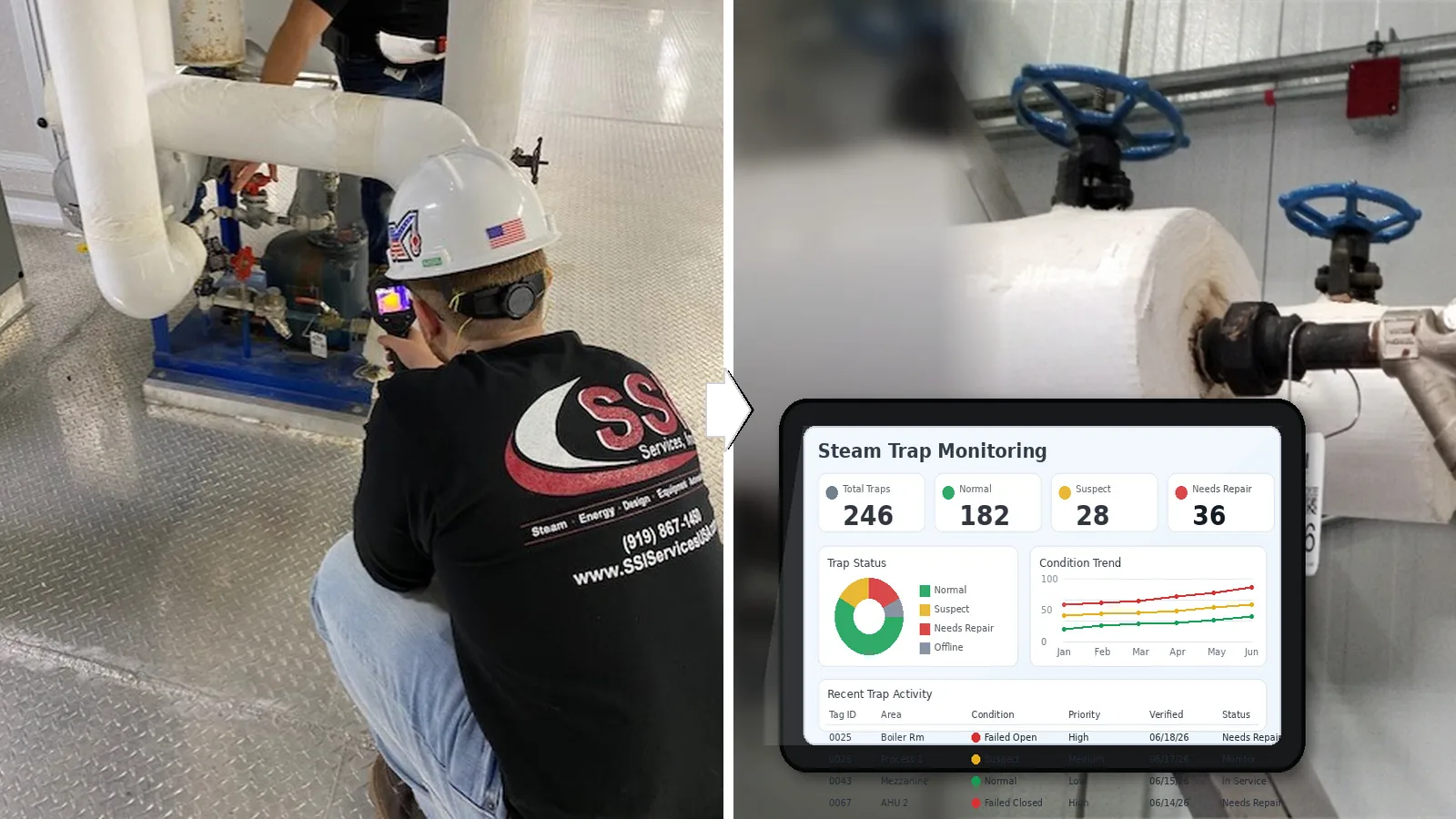
SSI structures steam trap monitoring programs around the facility operating needs, trap population, critical systems, maintenance capacity, and available asset data.
The program can begin after a baseline steam trap survey & mapping or use existing trap data when the facility already has reliable records.
Program Scope Definition
SSI defines the trap population, service areas, critical equipment, known failure history, access constraints, operating schedule, reporting needs, and maintenance priorities before the program begins.
The scope may cover a single process area, a hospital campus, a central utility plant, a pharmaceutical manufacturing facility, a food and beverage operation, or a full industrial steam system.
Baseline Data Review
When prior survey records are available, SSI reviews the data for completeness, age, asset naming, condition categories, unresolved failures, replacement history, and verification records. This helps determine whether the facility can move directly into monitoring or should first update the baseline.
Steam Trap Asset Inventory
SSI reviews and organizes steam trap asset data so the facility has a practical record of trap location, application (or misapplication), pressure, type, manufacturer, model, condition, and maintenance history.
Where included in scope, QR-based trap tags and asset records can help facility teams locate traps, review prior findings, and track replacement history.
Trap Population Segmentation
Not every trap needs the same level of monitoring. SSI helps separate the trap population by criticality, access, energy exposure, safety risk, failure history, and system impact.
This allows the facility to use the right level of monitoring for each group of traps instead of applying one generic cadence across the entire system.
Recurring Condition Review
SSI can support recurring field review of trap performance where wireless monitoring is not required or not justified. This may include ultrasonic testing, temperature confirmation, visual review, operating observations, and condition updates.
The goal is to keep the trap record current and prevent unresolved failures from becoming long-term losses.
Wireless Monitoring Candidate Selection
Some traps justify continuous visibility on critical equipment and high-pressure applications. SSI helps identify where wireless monitoring may create the most value, including critical steam users, high-value energy loss points, hard-to-access trap stations, repeat-failure areas, and systems where failure could affect production, sterilization support, heating, humidification, or facility reliability.
SteamIQ Products Available Through SSI
For facilities that need continuous visibility between inspections, SteamIQ wireless steam trap monitoring products are available through SSI.
SteamIQ products can support continuous trap monitoring, dashboard-based visibility, alarms, analytics, reports, and device-level condition review. SSI can incorporate SteamIQ products into a broader steam trap monitoring and management program, so monitoring data leads to action, not just alerts.
Corrective Action Prioritization
Monitoring should not stop at identifying a failed trap. SSI organizes findings by safety risk, energy impact, system reliability, equipment criticality, access requirements, and practical repair sequence.
This helps the facility decide which issues should be addressed first and which repairs can be planned during scheduled maintenance windows.
Steam Trap Repair and Replacement Support
SSI can support steam trap repair and replacement where scope, access, equipment needs, and facility conditions allow.
Corrective work may include trap replacement, strainer replacement, check valve replacement, universal trap station installation, piping modifications, associated valve and fitting work, and verification testing after repairs.
Verification and Record Updates
After corrective work, SSI can verify repaired or replaced traps and update the program record. Verification helps confirm that corrective actions resolved the identified condition and gives the facility a cleaner maintenance history for each trap.
Performance Reporting
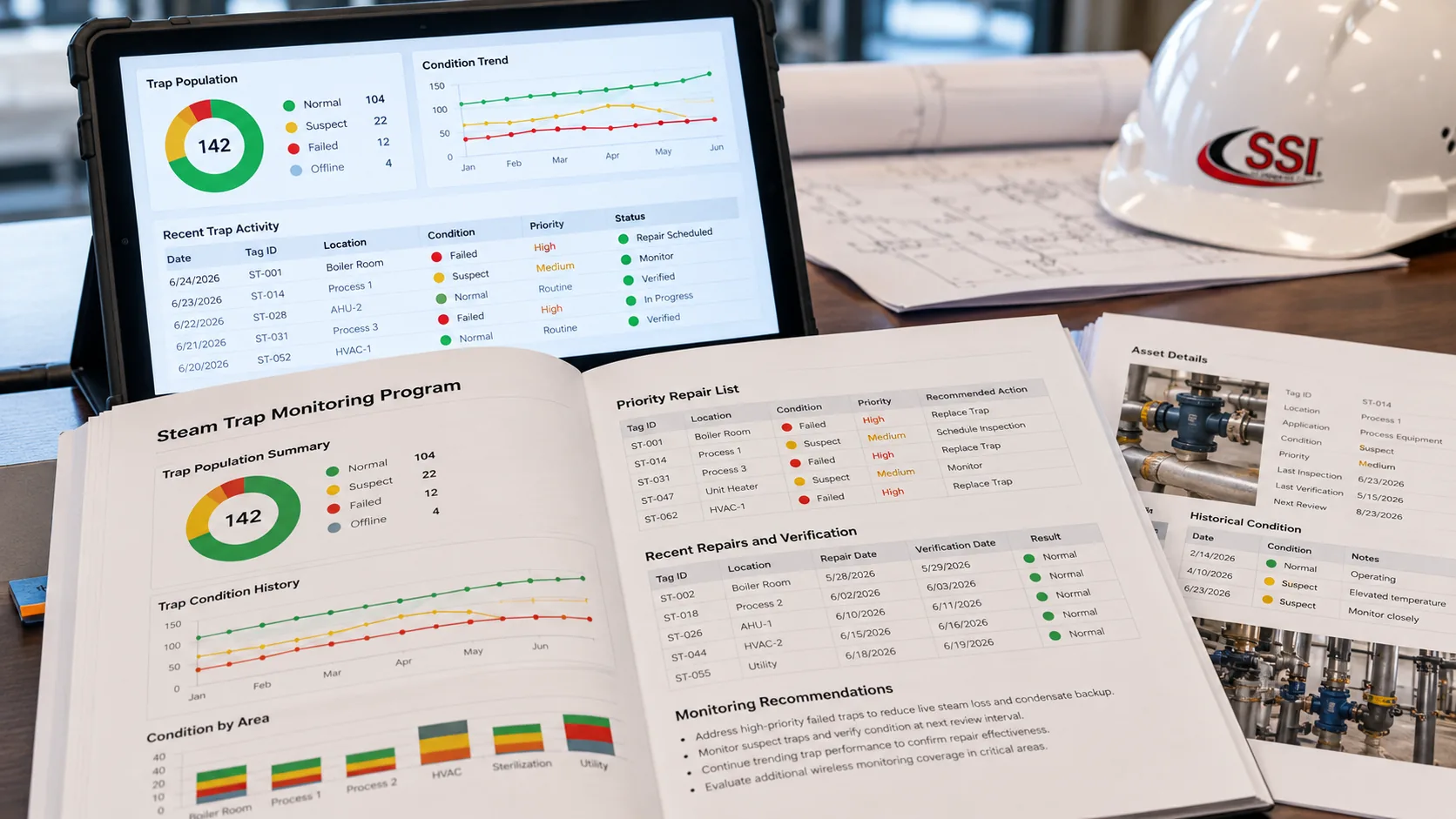
SSI can provide recurring performance reports that summarize trap population health, failed traps, repaired traps, unresolved issues, recurring failure patterns, energy exposure, repair priorities, and recommended next actions.
The report is designed to support action by SSI Services maintenance team, engineering, operations, and leadership.
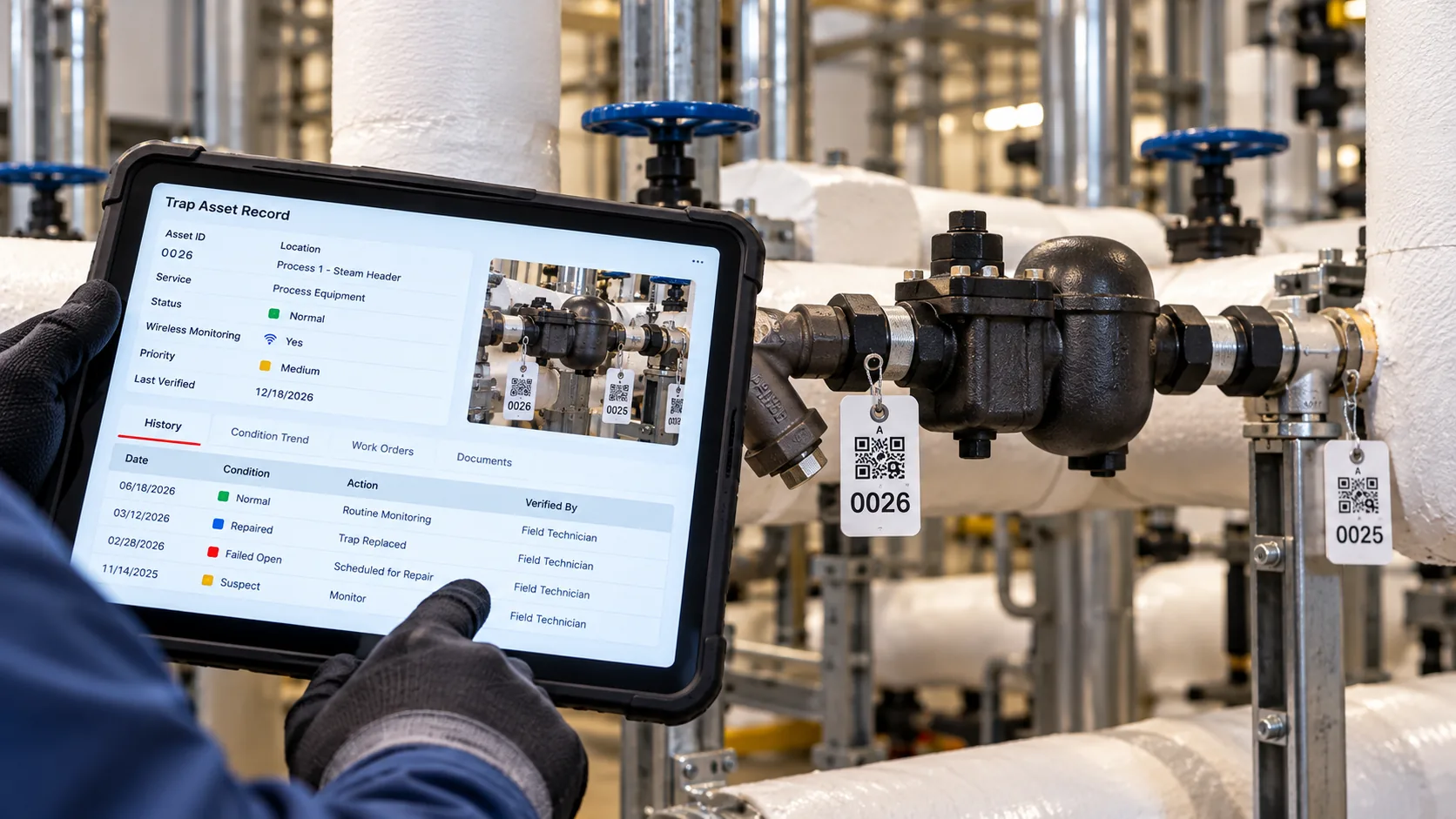
Wireless monitoring helps facilities identify trap issues between scheduled inspections. It is especially useful when a facility cannot rely only on periodic field surveys to manage risk, energy loss, or maintenance response.
Wireless monitoring products are available through SSI for facilities that need continuous steam trap visibility. These products can help monitor trap conditions, identify failures or leaks, support reporting, and provide dashboard-based information for review as part of a larger trap management program.
SSI’s role is to help place wireless monitoring in the right operational context.
Wireless monitoring should answer practical questions:
- Which traps justify continuous monitoring?
- Which trap groups can remain on recurring inspection?
- Which alerts need immediate action?
- Which failures create the highest energy or reliability exposure?
- Which repairs have been completed?
- Which repairs still need verification?
- Which traps show repeat failure patterns?
- Which areas of the system need deeper review?
Wireless monitoring is a product layer. The management program around it is what turns data into corrective action.
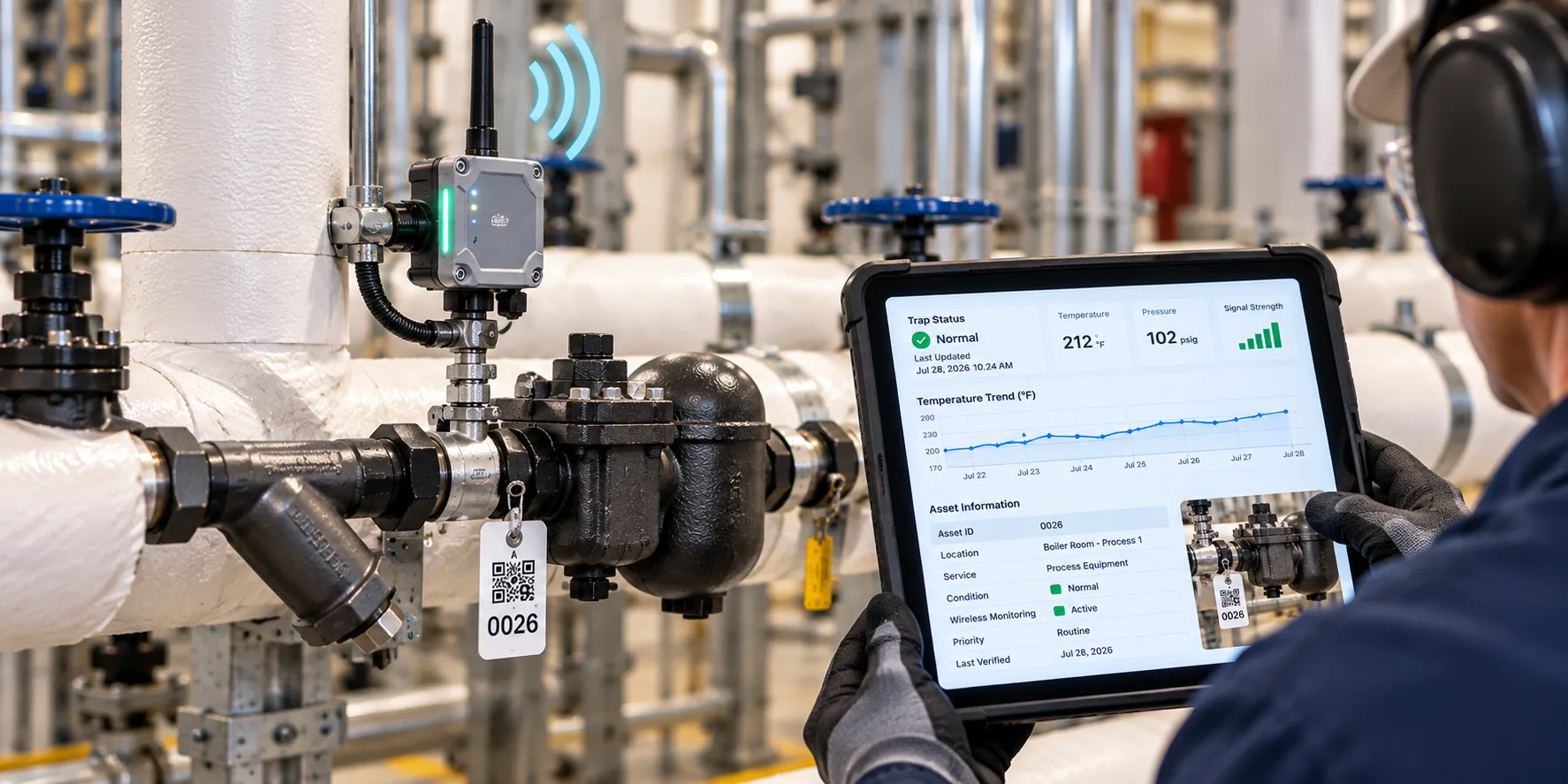
Wireless steam trap monitoring is not required for every trap. It is most useful when continuous visibility creates clear operational, energy, safety, or maintenance value.
Wireless monitoring may make sense for:
- Critical steam users.
- High-pressure or high-cost steam systems.
- Hard-to-access steam trap locations.
- Traps with repeat failure history.
- Large trap populations where failures can go unnoticed.
- Facilities with high energy costs or carbon reduction goals.
- Hospital, pharmaceutical, food and beverage, and industrial environments where steam reliability affects operations.
- Systems where failed traps contribute to condensate return problems, water hammer, or equipment instability.
- Facilities that need better visibility between formal survey cycles.
- Maintenance teams that need clearer repair prioritization and follow-up records.
The strongest programs usually use a tiered approach: continuously monitor the highest-value traps and manage the broader trap population through recurring review, asset records, and corrective action tracking.
A steam trap monitoring program should make the trap population easier to manage. SSI can help track and report the information facility teams need to act.
Depending on scope, SSI may track:
- Trap location and asset ID and installation picture.
- QR tag or asset tag information.
- Service area and equipment served.
- Trap type, size, pressure, manufacturer, and model.
- Current condition.
- Failure mode.
- Wireless monitoring status, where applicable.
- Last inspection or monitoring review date.
- Repair priority.
- Corrective action status.
- Replacement history.
- Verification testing results.
- Repeat failure patterns.
- Estimated energy or steam loss exposure where data is available.
- Recommended next steps.
The goal is to create a working record that supports maintenance planning, repair sequencing, budget decisions, and recurring performance review.
A steam trap monitoring program is appropriate when the facility needs more than a one-time condition assessment.
Common triggers include:
- A baseline steam trap survey has already been completed and the facility needs ongoing management.
- The facility has current trap data but no reliable process for repair tracking or verification.
- Trap failures keep recurring in the same areas.
- Failed traps remain unresolved after prior surveys.
- Maintenance teams do not have current trap asset records.
- Critical steam users need closer monitoring.
- Hard-to-access traps are difficult to inspect frequently.
- Energy costs are increasing without a clear explanation.
- Condensate return problems, water hammer, or equipment complaints suggest recurring trap failures.
- The facility wants to evaluate wireless monitoring for high-value traps.
- Leadership needs better reporting on steam trap performance, repair status, and cost exposure.
- The facility is planning a steam system improvement, repair, or replacement program.
If the facility does not have current trap data, start with a steam trap survey.
If the facility already has trap data and needs better control over what happens next, set up a steam trap monitoring and management program.
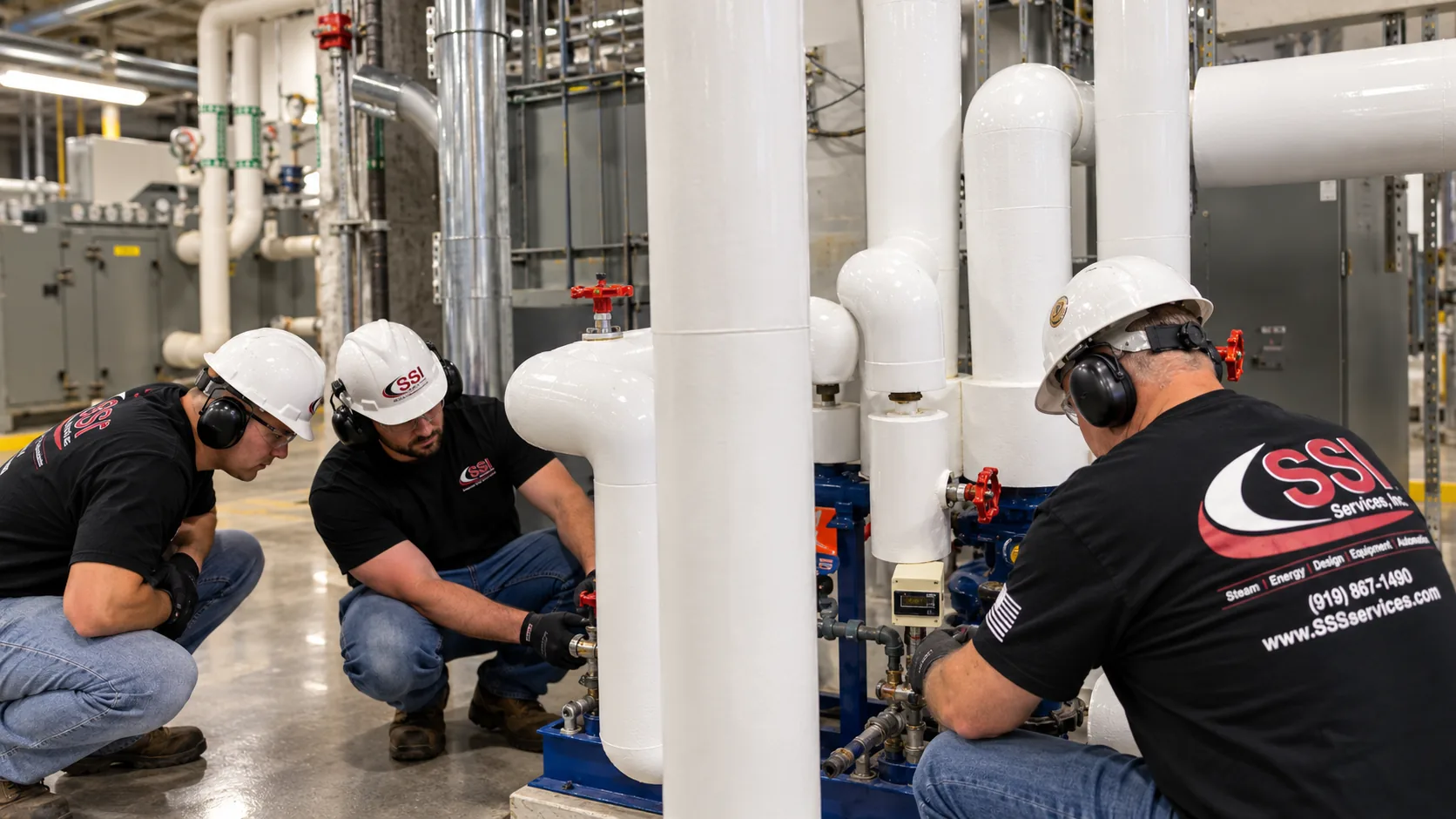
SSI Services has direct experience performing steam trap surveys, replacement programs, asset documentation, verification testing, condensate recovery support, and corrective work in active facilities.
The examples below demonstrate SSI’s trap population experience, corrective work capability, and ability to execute in operating environments.
U.S. Department of Veterans Affairs VISN 6: Seven VA Medical Centers
Under a multi-year Energy Savings Performance Contract, SSI conducted steam trap survey and replacement work across seven VA Medical Centers in North Carolina and Virginia. The work included trap testing, tagging, documentation, removal and replacement of failed radiator and non-radiator traps, associated piping, valves, fittings, and finish restoration.
The work was completed in operating hospital environments and during scheduled shutdown windows.
Life Sciences Manufacturing Campus: North Carolina
Following a steam trap survey that identified widespread trap failure across a campus, SSI replaced 177 failed steam traps under a coordinated work plan running alongside condensate recovery upgrades.
Work included application-appropriate trap replacements, new strainers, check valves, universal trap stations, verification testing, replacement of three condensate recovery units, and repair of one pressure-powered return unit in an active manufacturing environment.
Industrial Manufacturing
Production facilities and process plants rely on steam for heating, cleaning, humidification, equipment operation, and production support. Monitoring programs help manufacturers reduce losses, prioritize repairs, and maintain better visibility across large trap populations.
Food and Beverage Manufacturing
Food and beverage facilities depend on steam for process heating, sanitation, cleaning, and production consistency. Steam trap monitoring helps identify failures that affect temperature control, hygiene systems, equipment reliability, and energy use.
Healthcare and Hospitals
Hospitals rely on steam for heating, humidification, sterilization support, and occupied facility operations. Monitoring programs help facility teams manage trap condition, repair status, and recurring failures that may contribute to water hammer, condensate backup, or safety concerns.
Pharmaceutical and Life Sciences Manufacturing
Life sciences facilities depend on reliable steam-supported utilities for process support, sterilization support, cleaning, controlled operations, and equipment performance. Monitoring programs help connect trap condition, repair planning, verification, and documentation.
Academic and Institutional Campuses
Colleges, universities, and research campuses often operate distributed steam systems across laboratories, residence halls, dining facilities, classrooms, hospitals, and central utility plants. Monitoring programs help facilities teams manage aging trap populations across complex infrastructure.
Federal Government Facilities
Federal facilities often operate large steam systems that support occupied buildings, hospitals, laboratories, maintenance facilities, and central plants. Monitoring programs support documented trap management, corrective action planning, and long-term reliability.
Each SSI steam trap monitoring and management program is structured around the facility’s steam system, maintenance needs, trap population, and operating risk.
Depending on scope, SSI may provide:
- Steam trap monitoring program scope and implementation plan.
- Review of existing trap survey records.
- Steam trap asset inventory and data organization.
- QR-based asset tagging where included.
- Trap population segmentation by failure mode.
- Recurring trap condition review.
- Wireless monitoring recommendations.
- SteamIQ product availability for traps that justify continuous monitoring.
- Failed, leaking, blocked, or suspect trap rapid cycling.
- Corrective action prioritization.
- Steam trap repair and replacement support where scope allows.
- Verification testing after repairs.
- Replacement history and repair status updates.
- Recurring performance reports.
- Long-term failure trend review.
- Recommendations for trap application, access, installation, or system improvements.
The program is designed to help the facility act on trap data instead of letting survey findings, alerts, or repair needs sit unresolved.
Steam trap monitoring is the ongoing process of tracking steam trap condition, location, performance, repair status, replacement history, and failure trends across a facility steam system. It may include recurring inspections, wireless monitoring products, asset records, corrective action tracking, and performance reporting.
Steam traps should be monitored based on trap population size, system pressure, equipment criticality, failure history, accessibility, energy cost exposure, and facility risk. Some traps may be reviewed on a recurring inspection cycle. Critical or hard-to-access traps may justify wireless monitoring for continuous visibility.
A steam trap survey is a point-in-time assessment that identifies current trap failures and provides repair recommendations. A steam trap monitoring program is an ongoing management structure that tracks trap condition, repair status, wireless monitoring data where applicable, verification records, and long-term failure trends on a continuous basis.
Most facilities should start with a baseline steam trap survey if they do not have current trap data. Facilities that already have reliable trap records may be able to move directly into a monitoring program.
No. Wireless monitoring adds continuous visibility, but it does not replace steam system expertise. Field review, trap application knowledge, repair verification, and corrective action planning are still important parts of a complete program.
Yes. SteamIQ wireless steam trap monitoring products are available through SSI for facilities that need continuous visibility between scheduled inspections. SSI can incorporate SteamIQ products into a broader steam trap monitoring and management program.
Wireless monitoring should be considered for critical traps, hard-to-access traps, high-value steam systems, repeat-failure locations, large trap populations, or facilities where trap failures create significant energy, reliability, safety, or production risk.
Yes. SSI can support steam trap repair and replacement where scope, access, equipment needs, and facility conditions allow. Corrective work may include trap replacement, associated valves, strainers, check valves, universal trap stations, piping modifications, and verification testing after repairs.
Yes. SSI can review prior survey data, update asset records, identify unresolved corrective actions, and build a monitoring program around existing trap records when the data is reliable.
A monitoring report may include trap status, failed or suspect traps, wireless monitoring data where applicable, repair priorities, completed corrective actions, unresolved issues, verification results, repeat failure patterns, and recommended next steps.
Industrial manufacturers, food and beverage plants, hospitals, pharmaceutical and life sciences facilities, academic campuses, and federal facilities should consider steam trap monitoring when steam reliability, energy use, maintenance planning, or operational risk depends on trap performance.
If your facility relies on steam for production, process support, building and domestic heating, humidification, sterilization support, cleaning, or critical operations, steam trap performance affects energy cost, system reliability, equipment life, and maintenance workload.
SSI Services, Inc. helps facilities across North Carolina, Virginia, South Carolina, Georgia, and Tennessee monitor steam trap performance, track corrective actions, evaluate wireless monitoring options, and manage trap populations over time.
SSI Services, Inc. | Steam | Energy | Design | Equipment | Automation